Uluru-Kata Tjuta National Park
Yulara (Ayers Rock Resort), Northern Territory, Australia
Uluṟu-Kata Tjuṯa
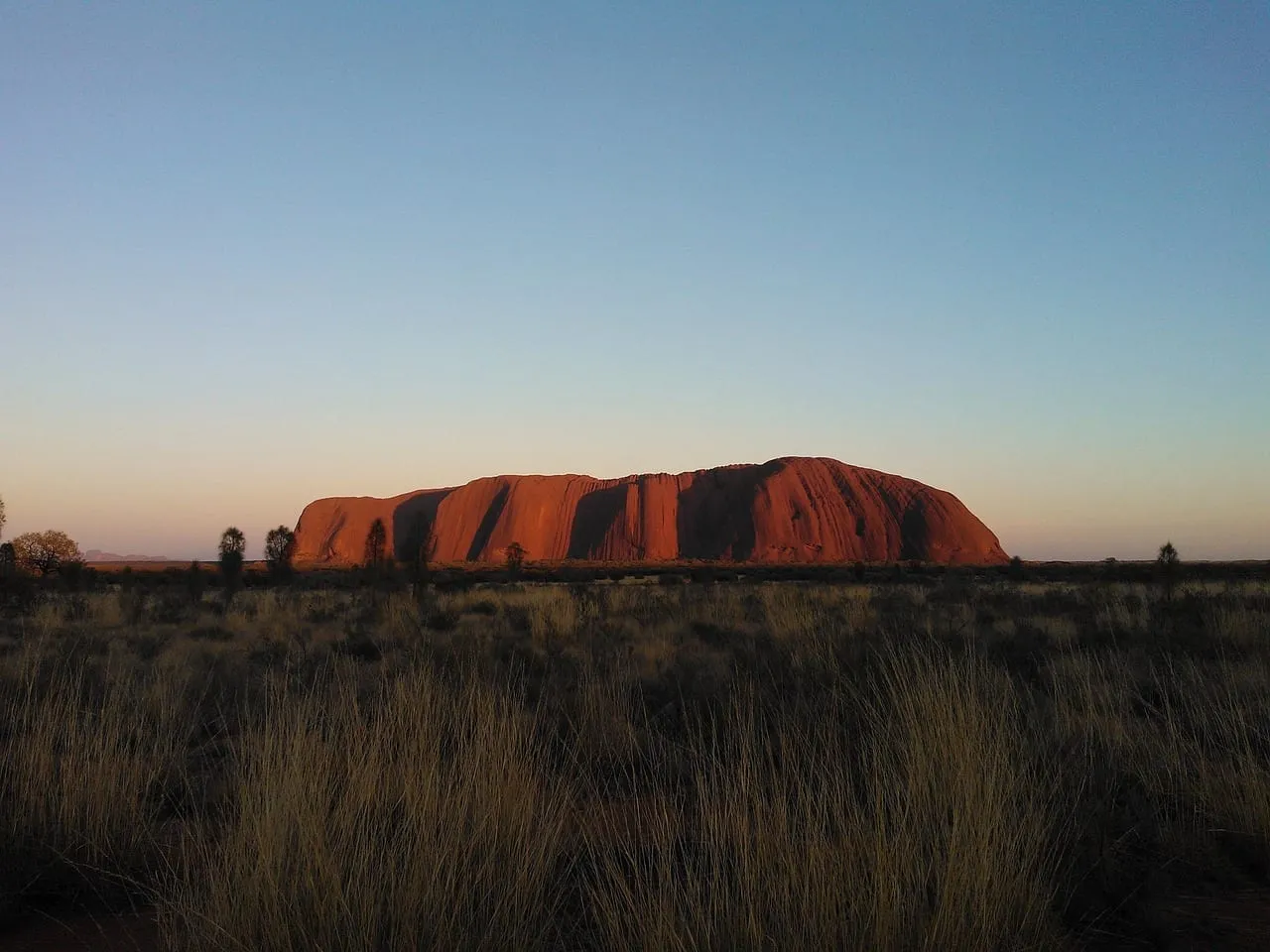
Uluru and the 36 domes of Kata Tjuta: walk the base, then watch the rock change colour.
Checked 6 October 2026

A sacred Aṉangu landscape in the middle of Australia, jointly managed with Parks Australia: the 348-metre Uluru, the domes of Kata Tjuta 50 km away by road, and the walks, rock art and waterholes around them. Everyone 18 and over needs a park pass (A$38 for 3 days, October 2026), bought online from Parks Australia; the climb closed for good in October 2019, and nearly every bed nearby belongs to one resort, so book your room and any hire car early.
About Uluru-Kata Tjuta National Park
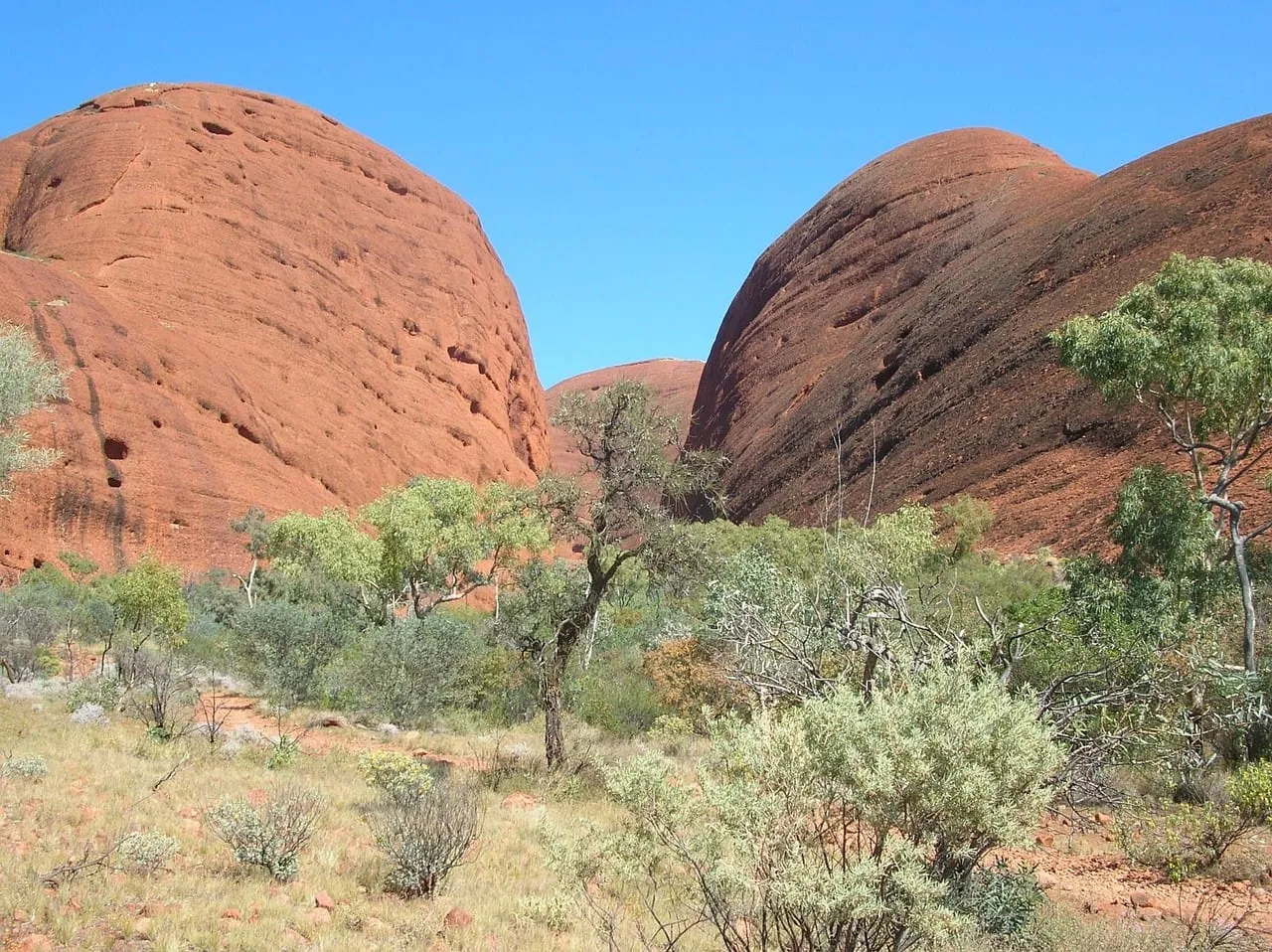
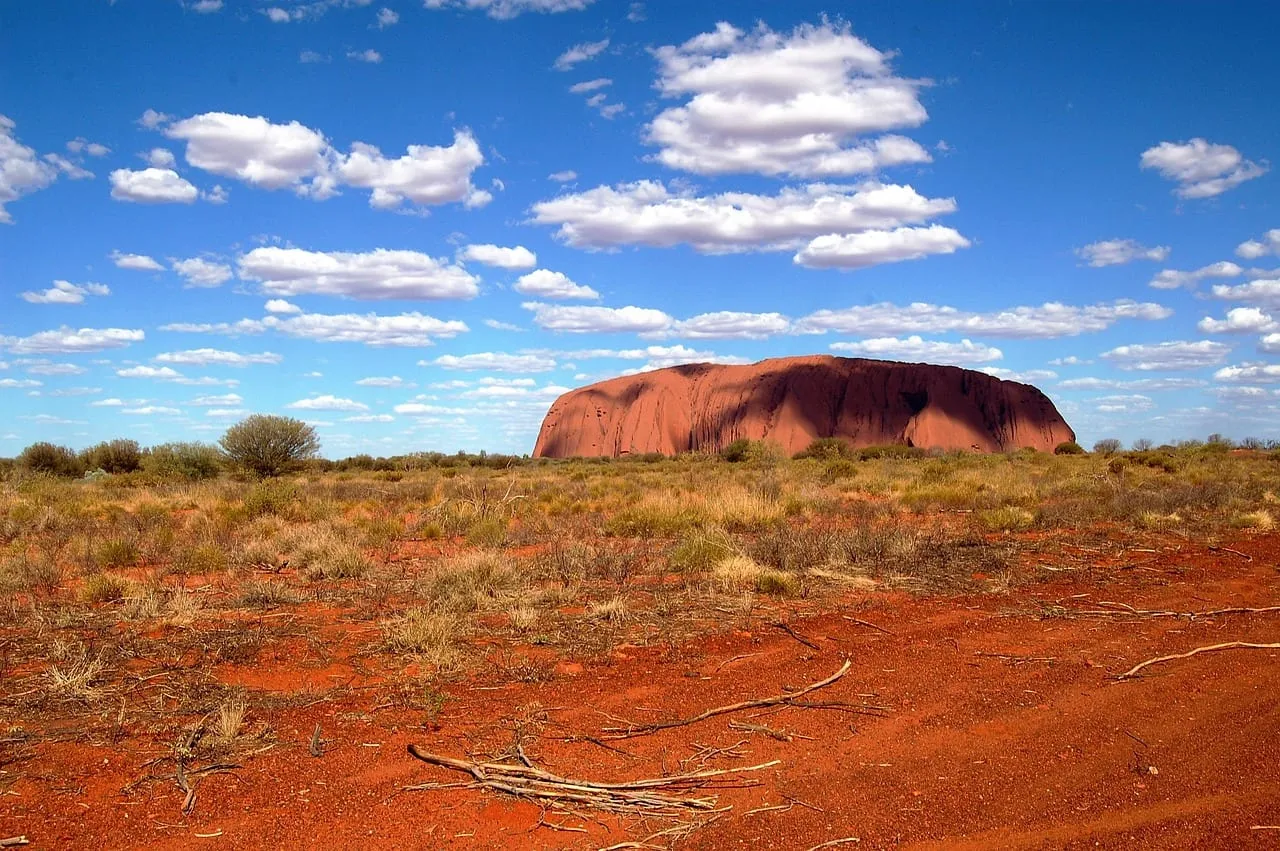
Uluru rises 348 metres out of flat red desert in the south of the Northern Territory, with a base 9.4 km around. About 50 km away by road, Kata Tjuta (once called the Olgas) is a cluster of 36 domes, the tallest 546 metres above the plain. Together they form Uluṟu-Kata Tjuṯa National Park, on the UNESCO World Heritage List since 1987 for its nature and since 1994 as a cultural landscape: one of only four places in Australia listed for both.
For Aṉangu, the Traditional Owners, this is not scenery but a living cultural landscape. Tjukurpa, the law and creation stories, explains how ancestral beings shaped the rock: the battle between Kuniya, the python woman, and Liru, the poisonous snake man, is told in the marks along the Kuniya walk; the Mala walk follows the travels of the hare-wallaby people. Some places carry knowledge that may only be seen in person by those with the right to it, which is why a few sections are signed as no-photography areas. Kata Tjuta is a men's site, and its stories are not shared with visitors.
Aboriginal people have lived in Central Australia for more than 30,000 years. The explorer William Gosse was the first European to see Uluru, in 1873. Visitors began climbing in the late 1930s, and the first section of the chain was installed in 1964. On 26 October 1985, in the event known as Handback, Aṉangu received the title deeds and leased the park back to the Australian Government for 99 years. It is now run by an Aṉangu-majority board with Parks Australia.
Aṉangu always asked visitors not to climb, and in 2017 the board voted unanimously to close the climb from 26 October 2019, the 34th anniversary of Handback. What replaced it is better: the walk around the base, where the rock looks completely different at every turn, with caves, rock art, waterholes and, after rain, waterfalls pouring off the top.
What to see
Uluru base walk
10.6 km of flat track all the way round the rock, about 3.5 hours. Start at the Mala car park early and go clockwise. Some sections close in summer heat: the North-east face walk from 11:00 and the Lungkaṯa walk from 14:00 when it reaches 40 °C. Part of the north-east face is a no-photography area, marked by signs.
Mala walk and Kantju Gorge
An easy 2 km return walk past rock art and old shelters to a sheer wall that turns into a waterfall when it rains. Wheelchair accessible. Rangers lead it free every day (see Tours).
Kuniya walk and Mutitjulu Waterhole
A short, shady walk to one of the few permanent waterholes at Uluru, with rock art and the Kuniya and Liru story in the rock. Busy mid-morning; quietest at sunrise, lunchtime and sunset. Swimming is not allowed.
Valley of the Winds, Kata Tjuta
The park's toughest walk (grade 4): the full circuit is 7.4 km and 3–4 hours through the domes, with water halfway. The first lookout, Karu, is 2.2 km return. When the forecast or actual temperature reaches 36 °C, the track closes beyond Karu lookout from 11:00. Aṉangu ask that you photograph no rock formations on this walk.
Walpa Gorge
2.6 km return, about an hour, along boardwalk and rocky track between two of the biggest domes to a grove of spearwood. Aṉangu ask that photos of the gorge keep both walls in frame. At sunset most people leave for the viewing area, so the benches are quiet.
Sunrise at Talinguru Nyakunytjaku
The main sunrise area, about 30 minutes' drive from the resort, looks across to Uluru with Kata Tjuta in the distance. For sunset, use the Uluru car or bus sunset areas (the only places in the park where alcohol is allowed) or the Kata Tjuta sunset and dune viewing areas.
Cultural Centre
A mud-brick building near the rock with displays on Tjukurpa, Pitjantjatjara language and joint management, the Tjukurpa Tunnel, Maruku Arts and Walkatjara Art galleries and Ininti Café, the only place in the park to buy food. Free, 07:00–17:45 daily; allow at least an hour, ideally two.
Field of Light
More than 50,000 glass spheres lit up on the dunes near the resort, seen on a 1.5-hour evening visit (A$50 adult, including coach transfers) or at dawn. Not a cultural site, but a big part of most visits.
Uluru-Kata Tjuta National Park tickets: which to buy and where
Everyone 18 and over needs an Uluṟu-Kata Tjuṯa park pass: A$38 for 3 consecutive days, or A$50 for a year. Buy it online from Parks Australia and scan the QR code in the left-hand lane at the entry station. The rule that catches people out: almost no tour price includes the pass, so you buy it yourself even on a tour.
The official ticket site
Parks Australia (Uluṟu-Kata Tjuṯa National Park)
The park's own site is uluru.gov.au (it used to be parksaustralia.gov.au/uluru), and its Buy your pass page sends you to book.parksaustralia.gov.au. Those two government domains are the only official online sellers. If you can't buy online, you can still pay at the entry station.
Park pass, 3 days
A$38 adult (18+); under 18 free
(€24)
Official ticketsSkips the ticket line
- Includes
- Entry to the whole park, Uluru and Kata Tjuta, for 3 consecutive days; can be extended by 2 days at the entry station with photo ID
- Best for
- Almost every visitor
Official site · as of October 2026See this ticket → (opens in a new tab)Annual park pass
A$50 adult (18+)
(€31)
Official ticketsSkips the ticket line
- Includes
- Unlimited entry for 12 months
- Best for
- Stays longer than 5 days, or people coming back within a year
Official site · as of October 2026See this ticket → (opens in a new tab)NT resident vehicle annual pass
A$109 per vehicle
(€68)
Official ticketsSkips the ticket line
- Includes
- Driver and all passengers for a year; vehicle must be registered in the Northern Territory (not hire or tour vehicles)
- Best for
- Territorians driving in
Official site · as of October 2026See this ticket → (opens in a new tab)Field of Light General Admission
A$50 adult, A$39 child
(€31 · €24)
ResellerSkips the ticket line
- Includes
- Return coach from the resort hotels, a view from the dune top, then a self-guided walk through the installation; leaves 30 minutes after sunset, about 1.5 hours
- Best for
- An easy evening activity
 Ayers Rock Resort · as of October 2026See this ticket → (opens in a new tab)
Uluru Sunrise and Kata Tjuta Day Trip by Bus (AAT Kings)
from €116 on GetYourGuide (shown in euros); A$219 adult direct for travel to 31 October 2026, A$209 from 1 November 2026
(€135 · €130)
ResellerDoes not skip lines
- Includes
- Hotel pick-up, sunrise with tea and coffee, Kata Tjuta viewpoint and Walpa Gorge walk, about 5 hours. The listing says you must buy the A$38 park pass yourself
- Best for
- Visitors without a car who want sunrise and Kata Tjuta in one morning
 GetYourGuide · as of October 2026See this ticket → (opens in a new tab)
Field of Light Sunrise Tour with Hot Drinks (AAT Kings)
from €71 on GetYourGuide (shown in euros)
ResellerSkips the ticket line
- Includes
- Pick-up from the resort, a walk through the lights in the dark, sunrise from the dune top with tea, coffee or hot chocolate; about 2 hours; free cancellation up to 24 hours
- Best for
- Seeing Field of Light and sunrise in one early start
GetYourGuide · as of October 2026See this ticket → (opens in a new tab)
How to buy
- Go to uluru.gov.au, open Plan, then Buy your pass, and follow the link to book.parksaustralia.gov.au (the Uluru page, not the Kakadu one: they are separate passes).
- Buy one 3-day pass per adult aged 18 or over; children and teenagers need nothing.
- Save the pass to your phone (iPhone users can add it to Wallet) or print it.
- At the entry station use the left-hand lane and scan the QR code. If you are on a tour or the Hop On Hop Off bus, have it ready too: operators expect you to bring your own.
Look-alike sites
The real sellers are uluru.gov.au and book.parksaustralia.gov.au, both Australian government domains ending in .gov.au; older links to parksaustralia.gov.au/uluru now redirect to uluru.gov.au. Any other site selling an Uluru 'entry ticket' is a reseller, and the official price is a flat A$38 per adult with no booking fee. Field of Light, Sounds of Silence and the resort's other experiences are sold by Ayers Rock Resort at ayersrockresort.com.au; they are not park passes.
We can never guarantee a ticket seller, tour company or deal. Prices, opening hours and what is included change, often without notice: check the details on the seller’s own page before you pay, and book through the official site where you can. How to avoid ticket scams · Disclaimer.
Guided tours of Uluru-Kata Tjuta National Park
You do not need a tour: the roads are sealed, the walks are signed, and the free ranger-guided Mala walk gives you the stories for nothing. A tour is worth it if you have no car (there are no taxis), if you want an Aboriginal guide, or for Kata Tjuta at sunrise. Tour prices almost never include the A$38 park pass.
Free ranger-guided walk
Ranger-guided Mala walk
Parks Australia
Daily at 08:00 from October to April and 10:00 from May to September, from the Mala car park. Rangers explain rock art, Tjukurpa stories, traditional tools and geology, ending at Kantju Gorge. Wheelchair accessible. No booking.
Free (park pass needed)
See this tour → (opens in a new tab)Small-group 4WD tour with an Aboriginal guide
SEIT Patji: A True Aboriginal Experience
 SEIT Outback Australia
A Traditional Owner family takes you to their homelands at Patji, just south of the park, to share family history and how people lived here before tourism. Tuesdays, Thursdays and Saturdays; up to 15 people; ages 5+; afternoon departure April–October, 07:00 November–March.
Guided walk with sunrise
Uluru Morning Guided Base Walk
AAT KingsSunrise and picnic breakfast, then the full 10.5 km base walk with a guide telling the Mala and Lungkata stories; leaves about an hour before sunrise; resort transfers included; park pass not included.
A$219 adult for travel to 31 October 2026; A$209 from 1 November 2026
(€135 · €130)
See this tour → (opens in a new tab)Camel ride
Camel to Sunrise
Uluru Camel ToursA one-hour ride through the dunes at dawn with Uluru and Kata Tjuta in view, then damper and billy tea at the Camel Farm. Ages 5+ (107 cm minimum); you give your weight when booking. A 45-minute Camel Express costs A$98. Starts from the Camel Farm at the resort, outside the park.
Scenic helicopter flight
15 Minute Uluru Helicopter Experience
Professional Helicopter ServicesFlights 08:00–16:00 daily, weather permitting, with resort pick-up. Flights do not go over the top of Uluru or Kata Tjuta. The 25-minute flight including Kata Tjuta costs A$370.
We can never guarantee a ticket seller, tour company or deal. Prices, opening hours and what is included change, often without notice: check the details on the seller’s own page before you pay, and book through the official site where you can. How to avoid ticket scams · Disclaimer.
Uluru-Kata Tjuta National Park deals and discounts
The park pass is cheap and there is nothing to save on it. The real costs are rooms, tours and transport at the resort, and the best savings are the free things (ranger walk, Cultural Centre, resort activities), a 3-night room offer while one runs and doing it yourself in a hire car.
Under 18s go free
Children and teenagers under 18 need no park pass; Australian school groups can apply for a fee exemption.
Free ranger-guided Mala walk
A free daily guided walk with park rangers (08:00 October–April, 10:00 May–September). It covers much of what paid half-day tours do on the Uluru side.
Free Cultural Centre and resort activities
The Cultural Centre costs nothing beyond the park pass. Ayers Rock Resort lists free activities too, including a bush food experience, didgeridoo workshop, Bush Yarns, guided garden walks and a visit to the Camel Farm.
Stay 3 nights, save 20%
Ayers Rock Resort's offer for Sails in the Desert, Desert Gardens Hotel and Outback Hotel: 20% off a 3-night stay, booked by 12:00 AEST on 20 October 2026 for travel from 1 November 2026 to 30 June 2027. Children 15 and under stay free in existing beds.
Cheaper AAT Kings tours from 1 November 2026
AAT Kings' resort prices drop by A$10 per adult for travel from 1 November 2026 (A$209 against A$219 until 31 October 2026, for the sunrise and Kata Tjuta tour and the guided base walk). That is also the start of the hottest time of year.
Free airport transfers for hotel guests
Resort hotel guests get a free AAT Kings coach that meets every Qantas, Jetstar and Virgin flight. No booking needed; follow the hotel transfer signs.
Best time to visit Uluru-Kata Tjuta National Park
Time of day: dawn and the hour before sunset are when the rock changes colour and when it is cool enough to walk. Do the base walk or Valley of the Winds straight after sunrise. The park says to avoid walking between 14:30 and 18:30, and in summer not to walk after 11:00. Park hours follow the sun: October 05:00–20:00, November 05:00–20:30, December–February 05:00–21:00, March 05:30–20:30, April 05:30–20:00, May 06:00–19:30, June–July 06:30–19:30, August 06:00–19:30, September 05:30–19:30.
Season: the park says May to September is best, with days usually 20–30 °C and little rain, but winter nights can drop below freezing (bring warm layers for sunrise). April (average high 29.9 °C) and October (32.3 °C) are good shoulder months. August and September bring wildflowers.
What to avoid: November to March, with average highs of 35–38 °C and peaks above 40 °C, track closures in heat, and swarms of flies (bring or buy a head net). The upside is storms that set waterfalls running off Uluru.
Tips and tricks
Gathered from travel forums, locals and the sight’s own advice, rewritten in our own words. What worked for others, not a guarantee.
Start at the Cultural Centre
The Tjukurpa displays explain what you are about to see, and the rangers at the desk tell you which tracks are open and closed for heat that day. Ininti Café there is the only place to buy food or drink in the park.
From Uluṟu-Kata Tjuṯa National Park, Cultural Centre page, 2026
Respect the no-photo signs
At signed sensitive sites, Aṉangu ask that you do not photograph the rock at all; you can still photograph plants, animals and people (ask Aṉangu before taking their picture). On the Valley of the Winds walk, photograph no rock formations. For the north-east face, the side you see from the resort and Field of Light, take only wide shots from a distance, ideally 1–2 hours before sunset when shadow hides the sacred details.
From Uluṟu-Kata Tjuṯa National Park, photography page, 2026
Carry a litre of water per hour
The park's own rule of thumb for walking. On Valley of the Winds there is drinking water at the start of the track and halfway round; food and drink are only sold at the Cultural Centre.
From Uluṟu-Kata Tjuṯa National Park, staying safe page, 2026
Book a hire car early, or choose the bus
There are no taxis or ride-hail at Yulara and only a limited number of hire cars (Avis and Hertz), which sell out. Picking the car up at the airport lets you get to the resort before the free coach. Without a car, the Uluru Hop On Hop Off bus asks you to book your seat in advance despite the name.
From TripAdvisor Uluru-Kata Tjuta forum, 2026
Allow 3 nights if you can
Visitors on the forums mostly stay two nights if flying in from abroad and three if driving; three gives you sunrise and sunset at both Uluru and Kata Tjuta without rushing, and the resort has run 3-night room offers (the current one must be booked by 20 October 2026).
From TripAdvisor Uluru-Kata Tjuta forum, 2026
Do Walpa Gorge at sunset
Most people head to the Kata Tjuta sunset area, leaving the gorge empty; the light on the walls is best late in the day. It is 2.6 km return on rocky ground, so allow more than an hour if you walk slowly, and check your bus return time first.
From Uluṟu-Kata Tjuṯa National Park and TripAdvisor Uluru-Kata Tjuta forum, 2026
Shoot the Milky Way from outside the park
The park closes at night, so star photos have to be taken outside it. The park suggests the sand-dune lookout beside the Lasseter Highway, about halfway between the entry station and the resort.
From Uluṟu-Kata Tjuṯa National Park, photography page, 2026
Leave the drone at home
Drones are banned in the park under the EPBC Act, and penalties apply. The same law makes climbing Uluru an offence.
From Uluṟu-Kata Tjuṯa National Park, FAQ and climb closure pages, 2026
Bring a fly net in summer
Flies are relentless in the warm months; the park lists a head net on its packing list, and they are sold at the resort.
From Uluṟu-Kata Tjuṯa National Park, when to come page, 2026
How to get to Uluru-Kata Tjuta National Park
- By air: Ayers Rock (Connellan) Airport, code AYQ, is 10 minutes from the resort, with direct flights from Sydney (about 3 hours), Melbourne (2 hours 40), Brisbane (3 hours 15) and Cairns (2 hours 50) on Qantas, Jetstar and Virgin Australia. Resort hotel guests ride a free coach that meets every flight.
- By road: Uluru is 465 km from Alice Springs on sealed roads, about 5.5 hours' drive, and many people combine it with Kings Canyon on the Red Centre Way. AAT Kings runs a coach from Alice Springs to the resort (A$259 adult, October 2026).
- Getting around: the resort is 20 minutes' drive from Uluru, 45 minutes from Kata Tjuta and 30 minutes from the sunrise area. All park roads are sealed, so a normal 2WD is fine. There are no taxis. The free resort shuttle (about every 20 minutes, 10:30–00:30) does not go into the park.
- Without a car: the Uluru Hop On Hop Off bus stops at the hotels, the Cultural Centre, Mala car park, Kuniya Piti, Mutitjulu Waterhole and the sunrise and sunset areas. An Uluru return costs A$54, a Kata Tjuta return A$110 and a 1-day pass A$140 (October 2026); park passes are not included. The last bus of the day is the sunset bus, with no time for walking.
- Parking: free car parks at every walk and viewing area. Do not stop where the road has coloured no-stopping lines, and stay out of the signed road to Mutitjulu community, which is closed to visitors without a permit.
Scams and problems to watch for
Tours that leave out the park pass
Almost every tour, the Hop On Hop Off bus included, quotes a price without the A$38 adult park pass, and some listings word it so it looks included. The tell-tale sign is a line saying passes must be 'pre-purchased'. Buy it yourself from book.parksaustralia.gov.au before your first trip into the park.
Look-alike pass sellers
Search results can show third-party sites offering an Uluru 'entry ticket' or 'pass'. The official pass is sold only through uluru.gov.au and book.parksaustralia.gov.au (both .gov.au) for A$38 per adult with no extra fee, or at the entry station. Any other domain or a higher price is a reseller.
One resort, high prices
Ayers Rock Resort, run by Voyages Indigenous Tourism Australia, owns nearly all accommodation, restaurants, the campground and many tours at Yulara. Rooms start around A$395 a night at the Outback Hotel (indicative low-season rate), A$455 at Desert Gardens and A$595 at Sails in the Desert, so book early and look at the 3-night offers. Budget options are the Ayers Rock Campground (powered sites from A$43, cabins from A$185) or Curtin Springs, about 100 km away. Self-catering at Emu Walk Apartments with the town-square supermarket cuts food costs.
Driving at night in a hire car
Visitors in an older forum thread (2018) reported hire contracts that make you liable for damage from hitting an animal between sunset and sunrise in the Northern Territory. Read your own contract's terms before a pre-dawn drive to Kata Tjuta, and drive slowly at dawn and dusk.
Climbing or off-track scrambling
Old guidebooks and some videos still show the climb. It closed for good on 26 October 2019; climbing is an offence under the EPBC Act and rangers issue penalties. The park also asks you not to climb onto boulders anywhere, as that can take you into sacred areas.
Accessibility
The Mala walk (2 km return, including the free ranger walk) is wheelchair accessible, and most of the park's walks have wheelchair-accessible sections. Walpa Gorge and Valley of the Winds are rocky and uneven, and Valley of the Winds is steep. Field of Light and Sounds of Silence involve a 300-metre uphill walk on uneven, sandy paths and are not fully wheelchair accessible. Ayers Rock Resort lends wheelchairs for use within the resort only, not in the park, and staff cannot push, so bring your own chair and a companion. Assistance dogs are allowed in the park on a lead of up to 3 metres; tell the entry station. Call the Cultural Centre on 08 8956 1128 for advice.
Combine it with
Kata Tjuta
Inside the same park and on the same pass, 50 km by road from Uluru. Valley of the Winds in the morning and Walpa Gorge or the sunset area in the afternoon make a full day.
Field of Light and the resort's outdoor dinners
The light installation on the dunes near the resort (A$50 adult), or Sounds of Silence, a dune-top dinner with a talk on the night sky (A$295 adult, ages 10+).
Kings Canyon (Watarrka National Park)
A deep sandstone canyon with the Rim Walk, on the Red Centre Way between Uluru and Alice Springs. AAT Kings runs a day tour from the resort (A$379 adult) and a transfer (A$205).
Mount Conner
A mesa on a privately owned cattle station outside the park, reached on SEIT's 4WD Mount Conner tour (A$399 adult).
Alice Springs
The nearest town, 465 km away, and the base for the West MacDonnell Ranges. Many road trips start or end here.
Questions people ask about visiting Uluru-Kata Tjuta National Park
Can you still climb Uluru?
No. The climb closed permanently on 26 October 2019, after the park's Aṉangu-majority board voted unanimously to close it. Climbing is now an offence under the EPBC Act and rangers issue penalties. The 10.6 km base walk is the way to see the rock up close.
How much is the Uluru park pass and where do I buy it?
A$38 per adult (18 and over) for 3 consecutive days, or A$50 for an annual pass; under 18s are free (October 2026). Buy it online through uluru.gov.au, which links to book.parksaustralia.gov.au, and scan it at the entry station. You can also pay at the entry station if you can't buy online.
Is the park pass included in tours?
Usually not. AAT Kings, SEIT and the Hop On Hop Off bus all say the park pass must be bought separately, so budget A$38 per adult on top of any tour price.
Can you take photos at Uluru?
Yes, almost everywhere, but not of the rock at signed culturally sensitive sites, and not of any rock formations on the Valley of the Winds walk. On the north-east face take only wide shots from a distance. Ask before photographing Aṉangu, and note that drones are banned and any commercial or social-media use needs a permit.
How many days do you need at Uluru?
Two nights is the minimum to see sunrise and sunset and walk the base; three nights adds Kata Tjuta and the Valley of the Winds without rushing. The 3-day park pass covers that.
When is the best time to visit Uluru?
Parks Australia says the best time is May to September, when days are usually 20–30 °C. April and October are warmer shoulder months. November to March is very hot (often over 35 °C), some walks close in the heat, and flies are bad. In any season, walk early in the morning.
Do I need a car at Uluru?
Not strictly: tours and the Hop On Hop Off bus cover the main sights, and there are no taxis. A hire car (Avis or Hertz at the airport and resort) is the most flexible and usually the cheaper option for two or more people, but book it weeks ahead because numbers are limited.
More sights in Australia

Before you go
The things that apply at every big sight: booking ahead, what skip-the-line really means, and the scams that follow tourists everywhere.