Sights in Japan
Japan's great sights are temples, shrines and castles, many of them in Kyoto and along the railway west through Himeji to Hiroshima and Miyajima, and most are cheap or free to enter and paid at the gate on the day. What needs planning is the trains and the crowds: decide early whether a rail pass fits your route, and see the famous sights at opening time or late in the day.
Checked 7 October 2026
Our sight guides for Japan

Fushimi Inari Taisha
Kyoto, Japan
Japan's head Inari shrine: tunnels of vermilion torii up a holy mountain, free and always open.
- From
- Free: the shrine charges no entry to the shrine or the mountain
- Time needed
- 1 hour for the main shrine and Senbon Torii; 2–3 hours for the loop over the summit
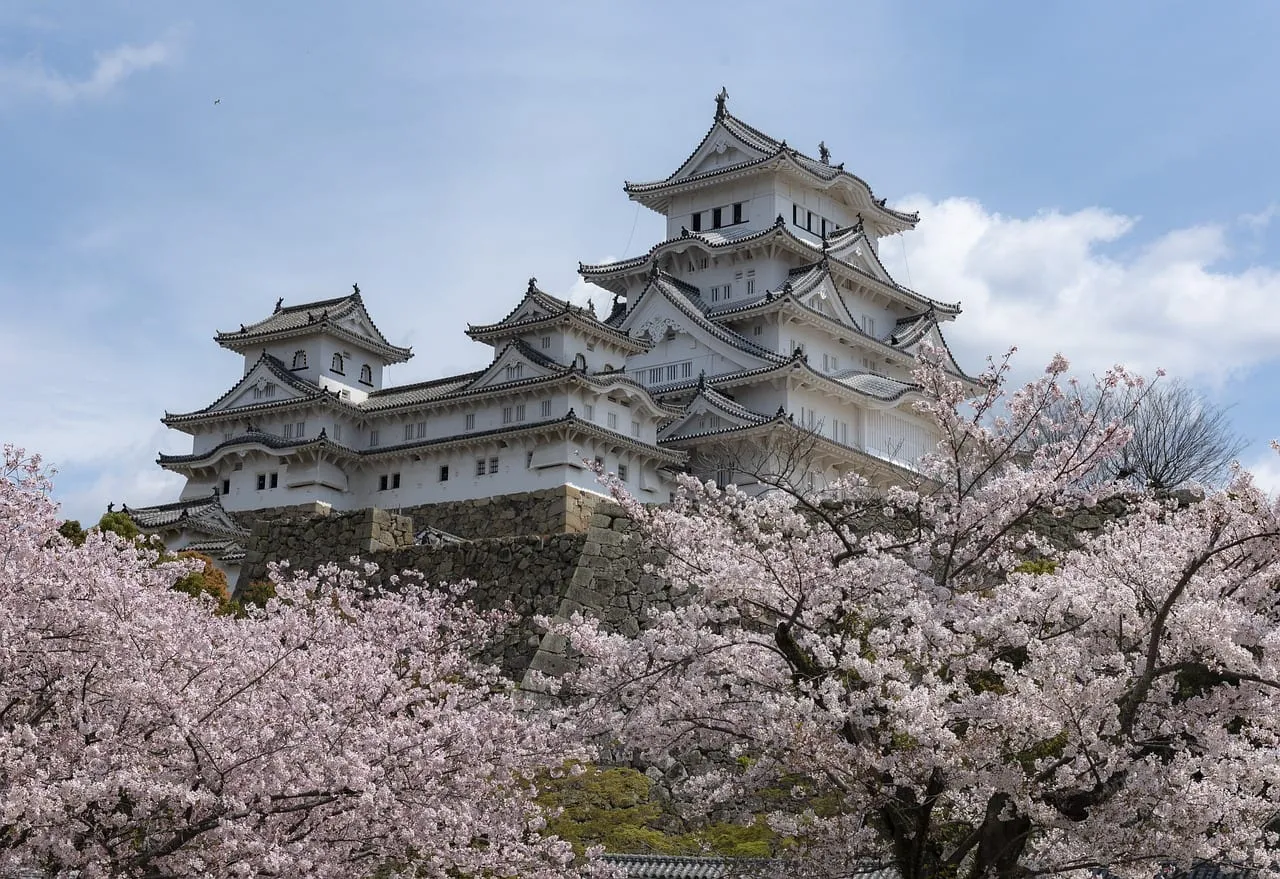
Himeji Castle
Himeji, Japan
Japan's finest original castle: a white keep from 1609 that survived war, fire and earthquakes
- From
- JP¥2,500(€14)
- Time needed
- 1.5–2 hours for the castle; about 3 hours with Kōko-en garden next door

Itsukushima Shrine
Miyajima, Japan
The shrine built over the sea, with the vermilion torii that floats at high tide.
- From
- JP¥300 adult shrine entry, plus JP¥100 visitor tax and the ferry(€2 · under €1)
- Time needed
- 1 hour in the shrine; half a day for the island, a full day with Mount Misen

Kinkaku-ji
Kyoto, Japan
Kyoto's Golden Pavilion: a gold-leaf Zen relic hall mirrored in a 600-year-old pond garden.
- From
- JP¥500 adult; JP¥300 primary and middle school pupils; younger children free(€3 · €2)
- Time needed
- 40–60 minutes for the garden route; add 30 minutes for matcha at the tea spot by the exit

Tōdai-ji
Nara, Japan
A 15-metre bronze Buddha in a giant wooden hall, with Nara Park's deer at the gate.
- From
- JP¥800 adult(€5)
- Time needed
- 1 hour for the Great Buddha Hall; 2–3 hours with Nigatsu-dō, Hokke-dō and the deer
Visiting sights in Japan
Rail passes and transport cards
The Japan Rail Pass covers JR trains nationwide, including every Shinkansen except the fastest Nozomi and Mizuho, which need a supplementary ticket (JP¥4,960 Tokyo–Kyoto), and the JR Miyajima ferry. A 7-day Standard Car pass costs JP¥50,000 on the official site, japanrailpass.net; since 1 October 2026 overseas agencies charge JP¥53,000 for the same pass (October 2026). For a trip around Kyoto, Osaka, Himeji and Hiroshima only, JR West's Kansai-Hiroshima Area Pass costs JP¥17,000 for 5 days and covers the Sanyo Shinkansen from Shin-Osaka to Hiroshima, JR local trains in the area and the Miyajima ferry. In Kyoto, the Subway & Bus 1-Day Pass costs JP¥1,100.
Entry fees, free sights and visitor taxes
Entry is cheap by European standards. Fushimi Inari Taisha is free; Kinkaku-ji costs JP¥500 and Itsukushima Shrine JP¥300, both paid at the gate with no timed entry (October 2026). Some sights now charge visitors more than locals: since 1 March 2026 Himeji Castle costs JP¥2,500 for adults who do not live in Himeji, against JP¥1,000 for residents, while everyone under 18 enters free. Expect small taxes on top: JP¥100 every time you land on Miyajima, added to the ferry fare; Kyoto's accommodation tax, from JP¥200 to JP¥10,000 per person per night depending on the room rate, since 1 March 2026; and JP¥3,000 departure tax per person from 1 July 2026.
Getting between the sights
The Shinkansen links the western sights quickly: Kyoto to Himeji takes about 44 minutes and Hiroshima to Himeji about an hour. For Miyajima, take the JR Sanyo Line from Hiroshima to Miyajimaguchi (about 30 minutes), then a 10-minute ferry. In cities, get an IC card such as Suica, PASMO or ICOCA, which work interchangeably on trains and most buses; most need a JP¥500 deposit, and they are also available in Apple Wallet. Kyoto city buses charge a flat JP¥230 by cash or IC card and give no change; in busy seasons they can be too full to board, so use trains and the subway where you can. Taxis are metered and strictly regulated.
Money, payment and etiquette
Visa, Mastercard and JCB are widely accepted, and since 28 September 2026 Kinkaku-ji takes credit cards for admission, but some small restaurants, cafés and shops still take only cash or an IC card, so keep yen on you. Convenience-store and station ATMs take most foreign cards, usually for a fee. Tipping is not part of the culture. Remove your shoes where temple halls ask you to, and wear shoes that slip off easily. From 1 November 2026 tax-free shopping becomes a refund: you pay the full price, including consumption tax, in the shop and claim it back at the airport or port at a terminal before check-in, within 90 days, with the goods still with you.
Seasons, holidays and crowds
Spring and autumn are the best and busiest seasons: cherry blossom comes in March or April, and autumn brings mild weather and changing leaves. Golden Week (29 April to 5 May), Obon in mid-August and the New Year holidays fill trains and hotels and push prices up. June brings the rainy season, and July and August are hot and humid, often above 35°C, with a real risk of heatstroke. Typhoons can strike from June to December, peaking from July to September, and can stop transport. Kyoto's official travel site publishes a free hourly crowd forecast, with live cameras, for its busiest areas, including Kinkaku-ji and Fushimi.
Scams and problems to know about
Japan has few classic tourist scams at its sights; the risks lie elsewhere. In nightlife districts, especially Kabukicho in Shinjuku and Roppongi in Tokyo, street touts lead visitors into bars where drinks are spiked or huge bills are charged to their card, so never follow a tout and check prices before ordering. Online, some listings sell 'entry' to sights that are free, such as Fushimi Inari Taisha, or present a tour as a ticket. Buy the Japan Rail Pass on japanrailpass.net or from an authorised agent, and book taxis on the company's own website: Kyoto's MK Taxi warns of fake sites impersonating it. Himeji Castle's JP¥1,000 rate is for registered residents only.
Also worth the trip
Not on Sightsale yet, but worth knowing about.
Kiyomizu-dera, Kyoto
A temple in eastern Kyoto older than the city's founding as capital, and one of its busiest sights; part of the Historic Monuments of Ancient Kyoto World Heritage Site.
Hiroshima Peace Memorial (Atomic Bomb Dome)
The ruined former Industrial Promotion Hall in Hiroshima's Peace Memorial Park, a World Heritage Site since 1996. It pairs with a day on Miyajima.
Nikkō Tōshō-gū
The richly decorated shrine of Tokugawa Ieyasu, founder of the Tokugawa shogunate, built in 1617 in Nikkō, north of Tokyo, and part of a World Heritage Site with Futarasan Shrine and Rinnō-ji.
Shirakawa-gō
A village of steep-roofed gasshō-zukuri farmhouses in the mountains of Gifu Prefecture, a World Heritage Site together with Gokayama.
Questions people ask about visiting Japan
Is the Japan Rail Pass worth it?
It depends on your route. A 7-day pass costs JP¥50,000 on the official site, or JP¥53,000 through overseas agencies since 1 October 2026, so it is most likely to pay off with several long Shinkansen journeys, such as Tokyo to Kyoto and Hiroshima and back. For Kyoto, Osaka, Himeji and Hiroshima only, JR West's Kansai-Hiroshima Area Pass (JP¥17,000 for 5 days) costs much less. Price single fares on your exact route before you buy.
Do I need cash in Japan?
Yes, some. Cards are widely accepted and Kinkaku-ji has taken cards for admission since 28 September 2026, but small restaurants, cafés and shops may take only cash or an IC card, and Kyoto buses take cash or IC cards only, without giving change. Convenience-store and station ATMs take most foreign cards.
Do I need to book Kyoto temples and shrines in advance?
Mostly not. Fushimi Inari Taisha is free with no tickets, and Kinkaku-ji (JP¥500) is paid at the gate with no timed entry. Himeji Castle is the one to plan: it sells digital tickets for 30-minute arrival slots, which get you through the gate faster on busy days.
When is the best time to visit Japan?
Spring and autumn, ideally avoiding Golden Week (29 April to 5 May), Obon in mid-August and the New Year holidays, when trains and hotels are full. June is the rainy season, July and August are hot and humid, and typhoons peak from July to September.
What tourist taxes does Japan charge?
A JP¥3,000 departure tax per person for departures from 1 July 2026, collected with your air or sea ticket; Kyoto's accommodation tax of JP¥200 to JP¥10,000 per person per night since 1 March 2026; and JP¥100 each time you visit Miyajima. From 1 November 2026, consumption tax on tax-free shopping is paid in the shop and refunded when you leave.
Sources for this page (28)
- Japan Rail Pass (official site): about the pass (accessed 7 October 2026)
- Japan Rail Pass: scope of validity (Miyajima ferry) (accessed 7 October 2026)
- Japan Rail Pass: use of Nozomi and Mizuho trains (accessed 7 October 2026)
- JR Group: price changes for the Japan Rail Pass (9 April 2026) (accessed 7 October 2026)
- JR West: Kansai-Hiroshima Area Pass (accessed 7 October 2026)
- JR West Miyajima Ferry: fares (accessed 7 October 2026)
- Kyoto City Bus and Subway Information Guide: bus fare (accessed 7 October 2026)
- Kyoto City Bus and Subway Information Guide: Subway & Bus 1-Day Pass (accessed 7 October 2026)
- Kyoto City: guide to the accommodation tax from 1 March 2026 (accessed 7 October 2026)
- Japan Tourism Agency: International Tourist Tax from 1 July 2026 (accessed 7 October 2026)
- Japan Tourism Agency: tax-free shopping, the Refund Method (accessed 7 October 2026)
- Himeji City: Himeji Castle admission fees from 1 March 2026 (Japanese) (accessed 7 October 2026)
- Himeji City: digital tickets (Japanese) (accessed 7 October 2026)
- Visit Himeji: getting here (accessed 7 October 2026)
- Kinkaku-ji (Shokoku-ji): access, hours and admission (accessed 7 October 2026)
- Omairi Pay: Kinkaku-ji card payment from 28 September 2026 (Japanese) (accessed 7 October 2026)
- Itsukushima Shrine: hours and admission (accessed 7 October 2026)
- Itsukushima Shrine: access (accessed 7 October 2026)
- Hatsukaichi City: Miyajima Visitor Tax (Japanese) (accessed 7 October 2026)
- japan-guide.com: Fushimi Inari Shrine (accessed 7 October 2026)
- Kyoto Travel Congestion Forecast (global.kyoto.travel) (accessed 7 October 2026)
- MK Taxi Kyoto: fraud warning (accessed 7 October 2026)
- UK FCDO travel advice: Japan, safety and security (accessed 7 October 2026)
- Wikivoyage: Japan (accessed 7 October 2026)
- Wikipedia: Kiyomizu-dera (accessed 7 October 2026)
- Wikipedia: Hiroshima Peace Memorial (accessed 7 October 2026)
- Wikipedia: Nikkō Tōshō-gū (accessed 7 October 2026)
- Wikipedia: Shirakawa-gō (accessed 7 October 2026)