A weekend in Osaka
Street food, neon canals and a castle, with Kyoto, Nara and Himeji a short train ride away.
Checked 13 October 2026
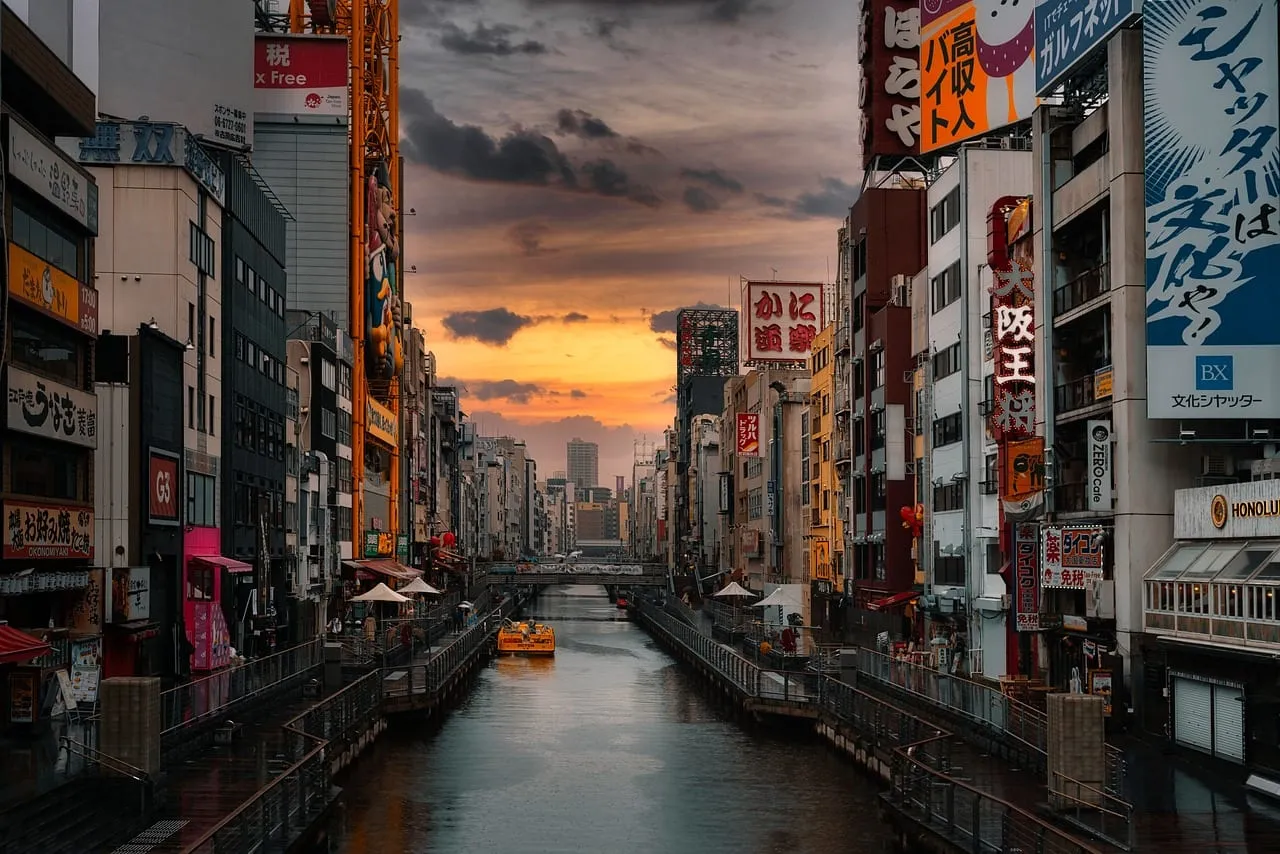
Osaka is Japan's eating city: takoyaki and okonomiyaki in Dotonbori, kushikatsu in Shinsekai, and a market and a department-store food hall for every budget, with Kyoto, Nara and Himeji all within an hour by train. The planning facts that matter: Osaka Castle, the observation decks and most sights take no reservations, but Tsutenkaku now runs on timed entry and its evening slots sell out, the aquarium and teamLab use date-based prices, and several museums close on Mondays.
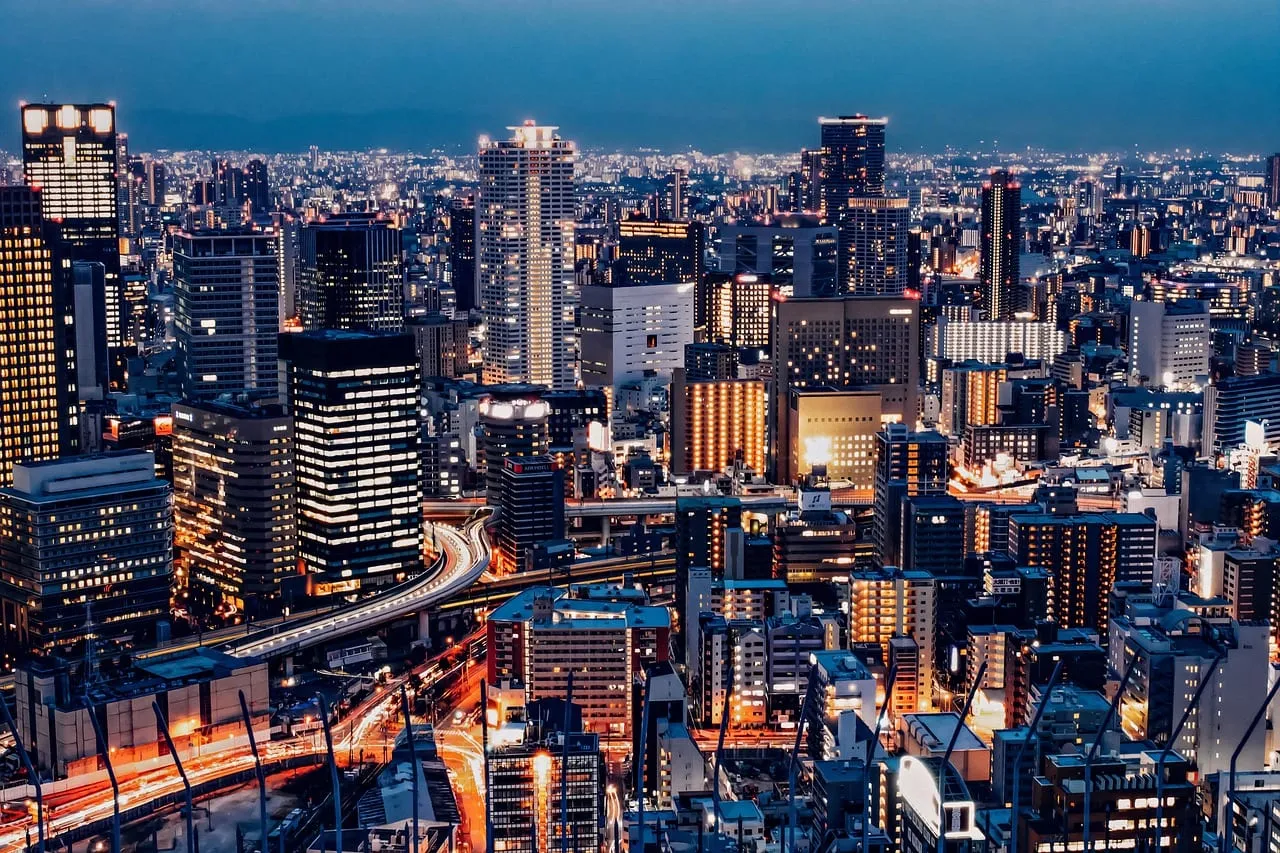
Osaka has two centres linked by the Midosuji metro line. Kita, around Osaka and Umeda stations, is the business and shopping side: glass towers, the Umeda Sky Building, department-store food halls and the narrow streets of Nakazakicho and Tenjinbashisuji just east. Minami, around Namba, is the noisy, neon side: Dotonbori's canal and its giant signs, the Kuromon market, Hozenji's lantern-lit alleys and the Shinsaibashi arcade. South of that, Shinsekai and Tsutenkaku keep a pre-war fairground feel, with Abeno Harukas, the 300-metre tower that was Japan's tallest building until 2023, a short walk away at Tennoji.
The city's nickname is kuidaore, eat till you drop, and a weekend here is built around food more than monuments. Meals are cheap and fast at the counters and the stand-up bars, queues are part of the ritual, and most places do not take bookings. The one big monument, Osaka Castle, is a 1931 concrete rebuild of the keep with a museum inside, set in a large park with the original Tokugawa walls and moats.
What makes Osaka a good base is the rail network: Kyoto is 15 minutes away by shinkansen, Nara 40 minutes on the Kintetsu line from Namba, Himeji Castle about half an hour west by shinkansen. Many visitors split a weekend into one Osaka day of castle, markets and neon, and one day out.
Osaka in two or three days: a plan
Day 1 is Osaka Castle in the morning and the Minami food streets from lunch until late; day 2 is Nara early, then Shinsekai, Tsutenkaku and Abeno Harukas in the south of the city. The third day goes to Kyoto (Fushimi Inari at dawn, Kinkaku-ji) or Himeji, and ends in Umeda. The plan pays as it goes: the Osaka Amazing Pass (JP¥3,500 a day) pays off only on a sight-heavy day, and its free entry to the Umeda Sky Building ends at 15:00, so the night view on day 3 is a paid ticket.
Day 1: Osaka Castle, Kuromon, Hozenji Yokocho and Dotonbori
Morning
Be at Osaka Castle's keep at 9:00 (JP¥1,200; tickets at the gate or online, no reservations). Your ticket also covers the underground Toyotomi Stone Wall Museum. Walk the park and the moats afterwards; if you like tea ceremony ware and Buddhist art, the Fujita Museum (JP¥1,000) is a 1-minute walk from Osaka-jo Kitazume Station on the north side.
Afternoon
Metro to Nippombashi for a grazing lunch at Kuromon Market (go before mid-afternoon, when stalls start to close), then walk ten minutes to Hozenji Yokocho and splash water on the moss-covered statue at Hozenji. From there it is two minutes to the Dotonbori canal and the Glico sign; take the Tombori River Cruise (JP¥2,000, timed boarding) if you want the signs from the water.
Evening
Okonomiyaki at Mizuno on Dotonbori (no bookings for small groups, so join the queue) or takoyaki standing up at Wanaka in Sennichimae, then walk the canal after dark when the signs are lit.
Day 2: Nara's Great Buddha, then Shinsekai, Tsutenkaku and Abeno Harukas
Morning
Kintetsu rapid express from Osaka-Namba to Kintetsu Nara (36–39 minutes, JP¥680), then 20 minutes' walk through Nara Park to Tōdai-ji. The Great Buddha Hall opens at 8:00 from November to March, 7:30 from April to October; JP¥800, cash only.
Full guide on Sightsale →Afternoon
Back at Namba by early afternoon, metro two stops to Ebisucho or Dobutsuen-mae for Shinsekai. Book a Tsutenkaku time slot online the day before (JP¥1,500) and have a kushikatsu lunch at Daruma's original 1929 shop: dip each skewer in the shared sauce only once.
Evening
Walk ten minutes to Tennoji for sunset from Abeno Harukas 300 (JP¥2,200, open until 22:00). From Tennoji the Midosuji line runs to Nagai for teamLab Botanical Garden (from JP¥1,800, evenings only, book online).
With a third day (Friday or Monday): Kyoto, or Himeji, and an evening in Umeda
Morning
JR special rapid from Osaka to Kyoto (about 29 minutes, JP¥580), then two stops on the JR Nara line to Inari. Fushimi Inari is free and open round the clock; before 7:30 the torii tunnels are almost empty. Or go west instead: shinkansen to Himeji (under half an hour) for the castle at 9:00.
Full guide on Sightsale →Afternoon
In Kyoto, Kinkaku-ji: JP¥500 at the gate, 9:00–17:00, no online booking. Buses in Kyoto are slow and crowded, so mix subway and taxi or bus. Return to Osaka by JR or the Hankyu line (JP¥410 from Kyoto-Kawaramachi).
Full guide on Sightsale →Evening
Umeda: the Hanshin department store basement food hall and its stand-up Snack Park, then the Kuchu Teien rooftop on the Umeda Sky Building (JP¥2,000, open until 22:30; the Amazing Pass covers it only until 15:00) for the night view. On a Friday the National Museum of Art on Nakanoshima stays open to 20:00.
If it rains
Spend it indoors and underground: the Osaka Aquarium Kaiyukan, the Nakanoshima Museum of Art and the National Museum of Art next door, and the Umeda food halls and underground malls. Tenjinbashisuji's covered arcade lets you walk a long way dry.
With children
The Kaiyukan aquarium and its whale sharks, Tsutenkaku's tower slider (from age 7 and 120 cm), the Tempozan Ferris wheel next to the aquarium and the deer in Nara. Universal Studios Japan is a full day on its own.
What to see in Osaka
The big sights
Landmark
Osaka Castle
The keep was rebuilt in 1931 with citizens' donations and has been a museum ever since, on Toyotomi Hideyoshi, the Warring States period and the 1615 siege, with an observation deck at the top. Since 2025 the ticket also covers the Toyotomi Stone Wall Museum, where you go underground to see the 16th-century walls the Tokugawa shogunate buried. The park, the moats and the huge stone walls are free. Two hours for keep and park.
Tip: Come at 9:00: the queue builds from mid-morning and the ticket line can be closed before the 17:30 last entry. There are no reservations, but an official web ticket saves the ticket queue. Cards and IC cards are accepted; luggage can be left at the ticket office for JP¥100 an item.
- Price
- JP¥1,200 adult; JP¥600 university and high school students (ISIC card for visitors); free for 15 and under with a passport(€7 · €3)
- Book ahead
- Not needed; no reservations taken
Official site (opens in a new tab)as of October 2026
Neighbourhood
Dotonbori and the Glico sign
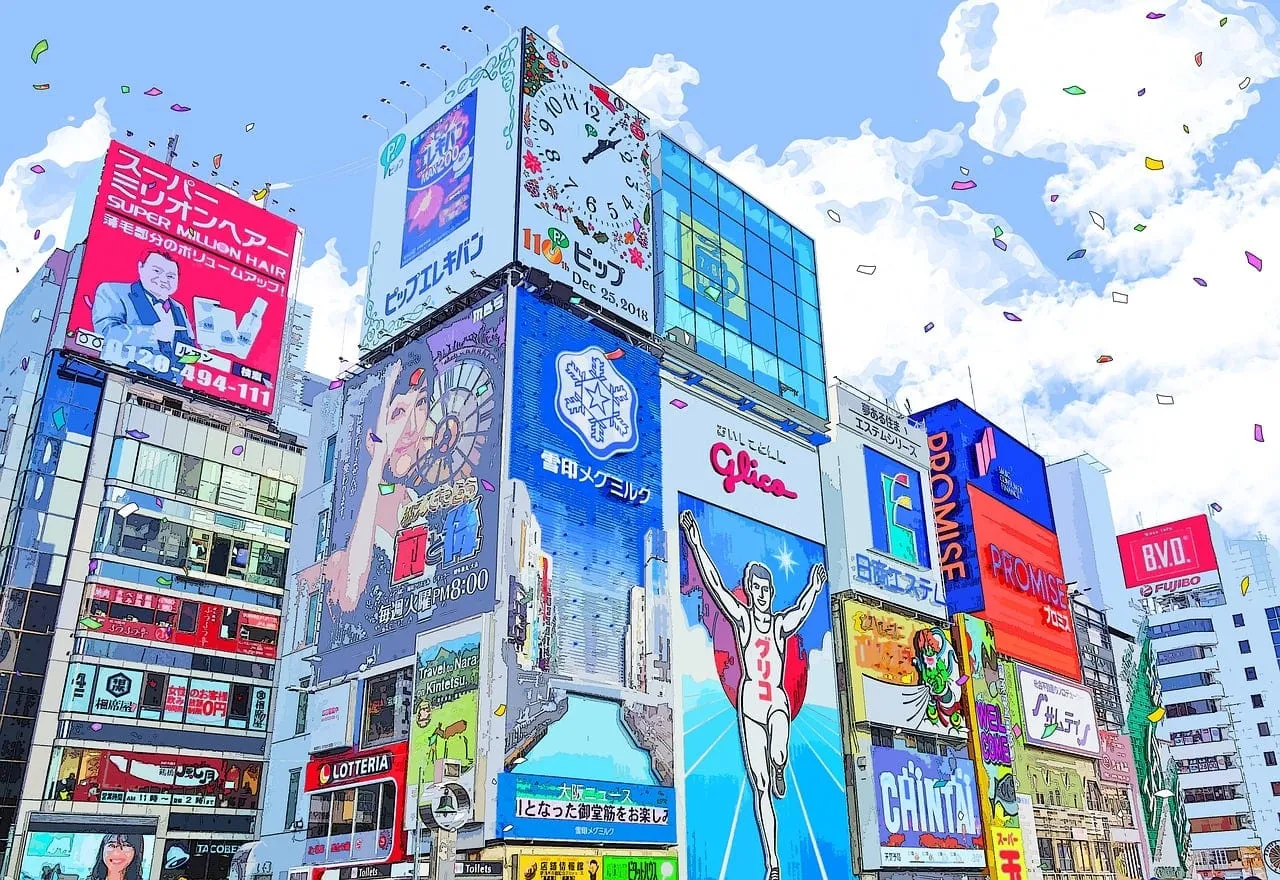
The canal street that sums up Osaka: the Glico running man, the moving crab of Kani Doraku, takoyaki stands, okonomiyaki restaurants and crowds until late. Ebisu Bridge is the photo spot for the Glico sign. An hour by day, longer after dark when the signs are lit.
Tip: The Tombori River Cruise (JP¥2,000 adults, every half hour 11:00–21:00) gives the canal from the water; boarding is by time slot exchanged at the counter on the day, and evening slots go first. It is included in the Osaka Amazing Pass.
- Price
- Free to walk; river cruise JP¥2,000(€11)
- Book ahead
- No; exchange cruise tickets by midday for an evening slot
osaka-amazing-pass.com (opens in a new tab)as of October 2026
Neighbourhood
Shinsekai and Tsutenkaku
A pre-war amusement quarter, half modelled on Paris and half on Coney Island, around Tsutenkaku, a 103-metre tower first built in 1912 and rebuilt in 1956. The streets are a jumble of kushikatsu counters, retro arcades and Billiken good-luck statues. The tower has decks at 91 metres, a tower slider and a Dive & Walk around the outside.
Tip: Every Tsutenkaku ticket now needs a time slot. Buy online by the day before; walk-ups and pass holders book a slot at the counter and may wait, and evening slots can sell out. From 30 December to 3 January prices rise to JP¥1,800.
- Price
- Tsutenkaku JP¥1,500 adult (15+), JP¥800 ages 5–14; tower slider JP¥1,100 extra(€8 · €5 · €6)
- Book ahead
- A day ahead for a set slot, especially for evenings
Official site (opens in a new tab)as of October 2026
Viewpoint
Umeda Sky Building, Kuchu Teien Observatory
Two towers joined at the top by the Kuchu Teien (floating garden) observatory on floors 39 and 40 and a 360-degree open-air roof deck, a walk from Osaka Station past Grand Front Osaka. 45 minutes.
Tip: The Osaka Amazing Pass covers entry only from 9:30 to 15:00; after that it gives 10% off, so come by day on a pass, or pay for the night view. The roof deck closes in heavy rain.
- Price
- JP¥2,000 adult; JP¥500 ages 4–12; under 4 free(€11 · €3)
- Book ahead
- Not needed; tickets on the 39th floor
Official site (opens in a new tab)as of October 2026
Viewpoint
Abeno Harukas 300
The observatory on the top floors of Abeno Harukas at Tennoji, a 300-metre tower that was Japan's tallest building until 2023, with views over the whole city and, on clear days, to the bay. A good place for sunset. An hour.
Tip: Same-day tickets are sold only at the 16th-floor counter and, at busy times, through numbered tickets that can run out; an advance web ticket avoids that. Last entry 30 minutes before closing. Not included in the Osaka Amazing Pass.
- Price
- JP¥2,200 adult (15+); JP¥900 ages 6–14; under 6 free(€12 · €5)
- Book ahead
- For sunset at weekends, buy a web ticket
Official site (opens in a new tab)as of October 2026
Experience
Osaka Aquarium Kaiyukan
One of the world's large aquariums, built around a central tank with whale sharks and rays that you spiral down around, floor by floor, through the habitats of the Pacific Rim. Two to three hours. Next to it in Tempozan are the giant Ferris wheel and the harbour cruises.
Tip: Prices change by date: JP¥2,800 for adults on most days in October and November 2026, up to JP¥3,500 on the busiest. Buy the dated e-ticket in advance. Opening is 10:30 on weekdays and 9:30 at weekends in autumn 2026, closing 20:00.
- Price
- JP¥2,800–3,500 adult; JP¥1,400–1,800 children; JP¥700–900 small children(€16–20 · €8–10 · €4–5)
- Book ahead
- Yes for weekends and holidays
Official site (opens in a new tab)as of October 2026
Experience
Universal Studios Japan
The theme park on the bay, with Super Nintendo World and the Wizarding World of Harry Potter. It is a whole day, door to door, so on a two-day weekend it replaces Osaka itself; worth it if Nintendo or the rides are the reason you came, not as a side trip.
Tip: Admission is dated and priced by demand: travel sites report adult tickets from about JP¥8,400 on the quietest dates since 1 September 2026, rising as dates sell, so check the official price calendar and buy early. Express Passes cost extra, are sold per date and often cost more than the ticket itself (Pass 4 options were reported at about JP¥14,800 in August 2026); some include a guaranteed slot for Super Nintendo World, otherwise you try for a free timed-entry slot in the park app. Resold tickets are refused at the gate.
- Price
- From about JP¥8,400 adult and JP¥5,500 children 4–11 on the quietest dates; Express Pass extra(€47 · €31)
- Book ahead
- Yes: as early as possible for weekends and school holidays
Official site (opens in a new tab)as of October 2026
Garden
teamLab Botanical Garden Osaka
After dark, teamLab turns the 24-hectare Nagai Botanical Garden into a walk-through light installation: lit trees, the lake, and in season a field of about 20,000 white sunflowers that glow. Outdoors and partly unpaved, so wear proper shoes. About 90 minutes.
Tip: Opens at 18:00 (18:15 until 9 October), last entry 20:30, or 21:30 from 28 October to 11 November 2026 (except 2 November). Closed 26 October, 14 December 2026 and 18 January 2027. Prices vary by date; tickets bought on site cost JP¥200 more and can sell out. Midosuji line to Nagai, exit 3, 10 minutes' walk.
- Price
- From JP¥1,800 adult (16+); JP¥500 ages 6–15; under 6 free(€10 · €3)
- Book ahead
- Book online for a fixed date
Official site (opens in a new tab)as of October 2026
Hidden gems
Neighbourhood
Hozenji Yokocho
Hidden gem
Two stone-paved alleys, each about 80 metres long, a minute from the Dotonbori crowds, lined with small restaurants and izakaya under lanterns. In the middle is Hozenji temple, where people pour water over a statue so thick with moss it has turned green.
Tip: Come after dark, when the lanterns are lit and the contrast with Dotonbori is strongest. Pouring water at the statue is free.
- Price
- Free
- Book ahead
- No
japan-guide.com (opens in a new tab)as of October 2026
Museum
Nakanoshima: the Museum of Art and the National Museum of Art
Hidden gem
The river island between Kita and the old merchant quarter has Osaka's art: the black box of the Nakanoshima Museum of Art (2022), with big touring shows, and next door the underground National Museum of Art. In autumn 2026 the Nakanoshima museum has an exhibition for 50 years of NHK's Sunday art programme (until 20 December) and the British Museum's Edo paintings (31 October 2026 to 31 January 2027).
Tip: The Nakanoshima museum is open 10:00–17:00 and closed on Mondays (or the next weekday after a holiday). The National Museum of Art's collection costs JP¥430, stays open to 20:00 on Fridays and is covered by the Osaka Amazing Pass (special shows are extra).
- Price
- Varies by exhibition; National Museum of Art collection JP¥430(€2)
- Book ahead
- Popular touring shows: buy a dated ticket online
Official site (opens in a new tab)as of October 2026
Museum
Fujita Museum
Hidden gem
A private collection of tea ceremony ware, Buddhist art and paintings built by Fujita Denzaburō, a Meiji-era industrialist who bought Buddhist treasures to keep them from going abroad. The museum is a minute from Osaka-jo Kitazume Station on the north side of Osaka Castle, with the Amijima Chaya teahouse beside it. About an hour.
Tip: Free for anyone under 19. Pay by card or IC card where you can: the museum asks for cashless payment.
- Price
- JP¥1,000 adult; under 19 free(€6)
- Book ahead
- No
Official site (opens in a new tab)as of October 2026
Museum
Open-Air Museum of Old Japanese Farmhouses
Hidden gem
A wooded park in Hattori Ryokuchi where farmhouses from all over Japan were taken apart and rebuilt: a thatched gassho house from Shirakawa in Hida, a farmers' kabuki stage from Shodoshima, a storehouse from Amami Oshima, a windmill from Sakai. About two hours in a wooded park, far from the city crowds.
Tip: Ride the Midosuji line straight through onto the Kita-Osaka Kyuko line to Ryokuchi-koen, then 15 minutes' walk west from the west exit. Closed on Mondays (or the next weekday after a holiday).
- Price
- JP¥800 adult; JP¥300 high school students; JP¥200 primary and middle school pupils(€5 · €2 · €1)
- Book ahead
- No
Official site (opens in a new tab)as of October 2026
Neighbourhood
Nakazakicho and Tenjinbashisuji
Hidden gem
Ten minutes east of Osaka Station, Nakazakicho is a warren of narrow lanes and old wooden houses turned into cafés, craft shops and vintage stores. A short walk further east, Tenjinbashisuji is billed as Japan's longest shopping street: a covered shōtengai of grocers, cheap eateries and old shops running north from Osaka Tenmangu, the shrine of the Tenjin Matsuri festival (24 and 25 July).
Tip: Nakazakicho wakes up late: most cafés and shops open around 11:00. Combine it with Umeda in the afternoon.
- Price
- Free
- Book ahead
- No
japan-guide.com (opens in a new tab)as of October 2026
Park
Minoo Falls
Hidden gem
A forested valley on the northern edge of the city with a paved 3-kilometre trail along the river to a 33-metre waterfall, past temple buildings and stalls selling momiji tempura, deep-fried maple leaves. About 45 minutes' walk each way; the maples are at their best in the second half of November.
Tip: Hankyu from Osaka-Umeda, changing at Ishibashi handai-mae, takes about 25 minutes (JP¥280). The falls and trail are lit up from 14 November to 6 December 2026.
- Price
- Free
- Book ahead
- No
Official site (opens in a new tab)as of October 2026
Day trips from Osaka
Kyoto: Fushimi Inari and Kinkaku-ji
Japan's old capital is so close that many visitors base themselves in Osaka. In a day, pair the vermilion torii tunnels of Fushimi Inari (free, open round the clock) with the Golden Pavilion of Kinkaku-ji (JP¥500 at the gate, 9:00–17:00), or Gion and Kiyomizu-dera. Kyoto is crowded: Fushimi Inari is near empty before 7:30 and packed from mid-morning, and Kinkaku-ji's pond fills with coach groups after opening, so start early.
- Getting there
- JR special rapid from Osaka Station to Kyoto, about 29 minutes, JP¥580; or the shinkansen from Shin-Osaka in about 15 minutes (about JP¥1,450–1,490 unreserved). From Kyoto Station the JR Nara line reaches Inari in 5 minutes (JP¥150). The private Hankyu line runs from Osaka-Umeda to Kyoto-Kawaramachi in Gion in about 43 minutes for JP¥410. Pay with an IC card.
- Eat
- Kinkaku-ji's tea spot by the exit serves matcha with a sweet for JP¥500. Kyoto's city buses charge JP¥230 a ride, cash or IC card, and are often full; the subway and trains are quicker.
- Tip
- Kinkaku-ji's ticket desk takes credit cards since 28 September 2026; carry cash for everything else at Kyoto's temples. Leave Kinkaku-ji for the afternoon after Fushimi Inari at dawn, or the reverse at 9:00 sharp.
Full guide on Sightsale →shokoku-ji.jp (opens in a new tab)as of October 2026
Nara: Tōdai-ji and the deer
A 15-metre bronze Buddha in one of the world's largest wooden halls, Tōdai-ji, at the end of a walk through Nara Park, where about a thousand semi-wild deer bow for crackers. Half a day for Tōdai-ji, the park and Kasuga Taisha; a full day with Kofuku-ji and Naramachi.
- Getting there
- Kintetsu Nara line from Osaka-Namba to Kintetsu Nara, 36–39 minutes by rapid express, JP¥680 (not covered by the Japan Rail Pass). JR from Osaka Station to JR Nara takes about an hour, JP¥840. From Kintetsu Nara Station it is 20 minutes on foot to Tōdai-ji.
- Eat
- Bring yen: the Tōdai-ji windows and the deer cracker stalls (JP¥200 for a bundle) take cash only. Eat before the park; any food in your hand draws deer.
- Tip
- Be at the Great Buddha Hall at opening (8:00 November–March, 7:30 April–October), before the coaches. With the deer: hand crackers over quickly one at a time, then show empty palms; they nip and butt if teased, so keep small children and bags clear.
Full guide on Sightsale →todaiji.or.jp (opens in a new tab)as of October 2026
Himeji Castle
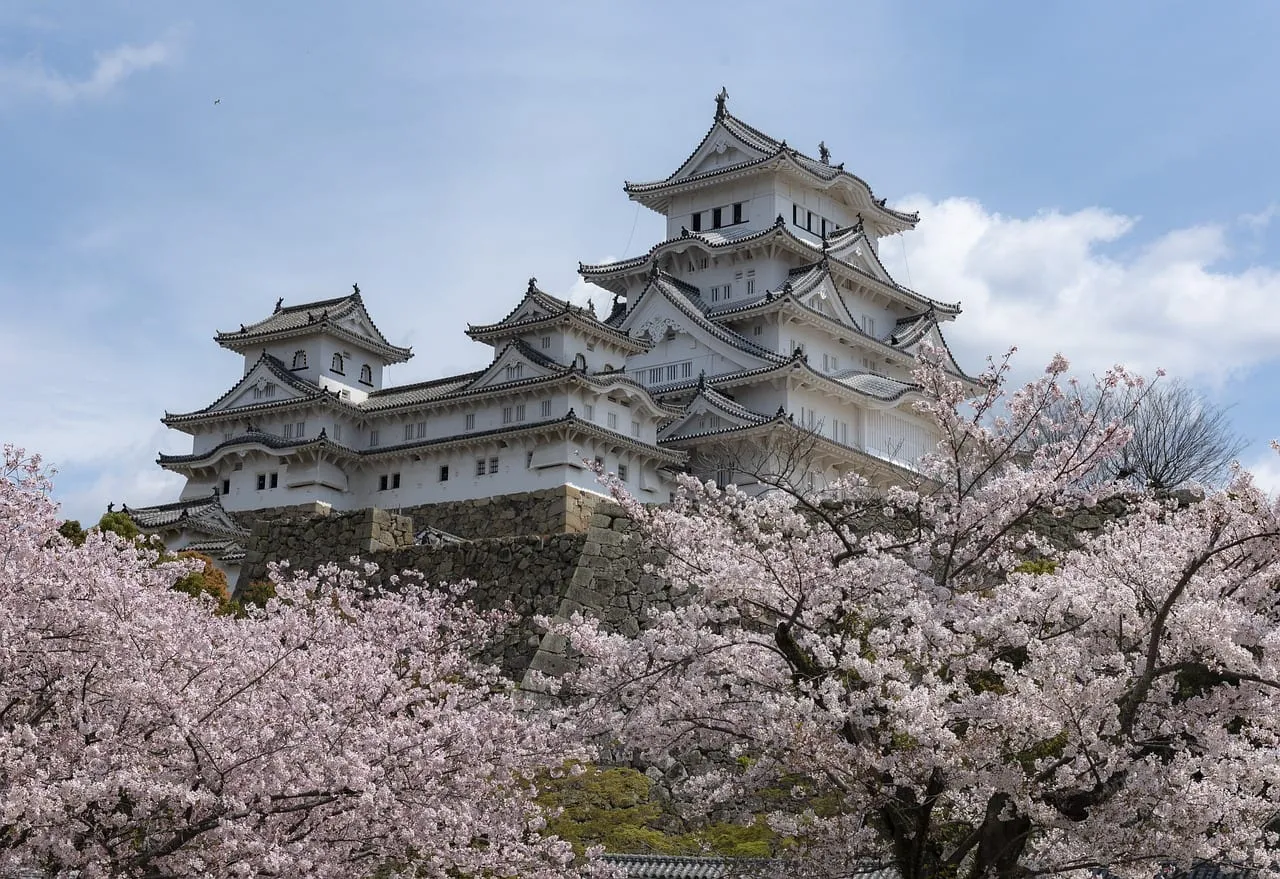
A UNESCO World Heritage castle whose white keep of 1609 that survived war and earthquakes, stands at the top of the main street from Himeji Station. Two hours for the castle, three with Kōko-en garden next door.
- Getting there
- Sanyo shinkansen from Shin-Osaka to Himeji, under half an hour, about JP¥3,520 unreserved; or the JR special rapid from Osaka Station, about 60–65 minutes, about JP¥1,490 by IC card (covered by the JR Kansai Area Pass). From Himeji Station's north exit, walk 20 minutes up Otemae-dori.
- Eat
- Adults who do not live in Himeji can buy the castle ticket with a JP¥1,000 voucher for shops and restaurants in the castle town at no extra cost, while daily stocks last; spend it on Otemae-dori.
- Tip
- Adults pay JP¥2,500 (JP¥2,600 with Kōko-en); under 18s are free. Buy a dated digital ticket on busy days to skip the ticket-office queue (not the queue at the keep), and be at the gate before the 9:00 opening: the queue for the keep builds once the Osaka and Kyoto day-trippers arrive.
Full guide on Sightsale →himejicastle-ticket.jp (opens in a new tab)as of October 2026

Where to eat in Osaka
Osaka eats fast, cheap and often standing: takoyaki (octopus balls), okonomiyaki (cabbage pancakes cooked on a griddle), kushikatsu (battered skewers) and butaman (pork buns) are the signature dishes, and the department store basements are the city's pantry. Most popular places take no reservations, so eat at off-peak times or join the queue; the high-end counters are the opposite and need booking weeks ahead. Lunch runs from about 11:30, dinner from 18:00.
Restaurant (okonomiyaki)
¥Mizuno
Dotonbori
An okonomiyaki shop that has been on Dotonbori for more than 70 years, buying its ingredients at Kuromon market. Order the yamaimo-yaki, made with grated mountain yam, or the old-fashioned yoshoku-yaki.
Booking: Queue; open daily 11:00–22:00 (last orders 21:00), no closing day since February 2026.
mizuno-osaka.com (opens in a new tab)as of October 2026
Street food (takoyaki)
¥Takoyaki Doraku Wanaka, Sennichimae
Namba / Sennichimae
Takoyaki stand with branches across Minami; Sennichimae is the main shop. Order the classic sauce version, or try it with salt only to taste the batter; boxes of 8, 12 or 15 depending on the shop.
Booking: No booking; short queue at peak times.
takoyaki-wanaka.com (opens in a new tab)as of October 2026
Restaurant (kushikatsu)
¥Kushikatsu Daruma, Shinsekai main shop
Shinsekai
Founded in Shinsekai in 1929, Daruma claims kushikatsu as its invention: beef and potato on skewers at first, now more than 30 kinds. The house rule: one dip in the shared sauce per skewer; use the free cabbage to scoop more sauce.
Booking: No bookings at the main shop. Weekdays 11:00–22:30, weekends and holidays from 10:30; open every day.
kushikatu-daruma.com (opens in a new tab)as of October 2026
Market
¥¥Kuromon Market
Nippombashi
About 150 shops along a 580-metre covered street known as Osaka's Kitchen: tuna, oysters, grilled scallops, wagyu skewers, fruit and pickles. Today it is mostly a tourist grazing street, and prices reflect that: a wagyu skewer costs JP¥800–1,500.
Booking: No booking. Most stalls about 8:00–18:00 and wind down in the afternoon; some close on Sundays and holidays. Go in the morning.
en.japantravel.com (opens in a new tab)as of October 2026
Depachika (food hall)
¥Hanshin Umeda main store food halls
Umeda
The basement food floors of the Hanshin department store opposite Osaka Station: bento, sweets, pickles and prepared food, and on B1 the Snack Park, a stand-up food court where office workers eat quickly. On B2 the Hanshin Bar Yokocho has small bars and restaurants.
Booking: No booking. Snack Park 10:00–22:00 (last orders 21:30); Bar Yokocho 11:00–22:00.
hanshin-dept.jp (opens in a new tab)as of October 2026
Takeaway (butaman)
¥551 Horai
Stations and department stores
Osaka's pork bun: hand-wrapped butaman, made and sold the same day, about 170,000 a day. Two for JP¥500, boxes of 4, 6 or 10; the classic gift to take home on the shinkansen.
Booking: No booking; short queues at station counters.
551horai.co.jp (opens in a new tab)as of October 2026
Kissaten (coffee house)
¥Marufuku Coffee, Sennichimae main shop
Sennichimae / Namba
A kissaten (old-style coffee house) founded in 1934; the Sennichimae main shop is the place to sit over a coffee the way Osaka has since the 1930s, a few minutes from Namba. There are branches in the Umeda department stores and at Abeno Harukas.
Booking: No booking.
marufukucoffeeten.com (opens in a new tab)as of October 2026
Restaurant (Michelin-starred sushi counter)
¥¥¥¥Sushi Shigenaga
Kitashinchi
A sushi counter in Kitashinchi with one Michelin star in the 2026 guide. Fish comes mainly from Kitakyushu, some bought at Tsuruhashi and Kuromon markets; the rice is seasoned with the sharper vinegar of eastern Japan and served at body temperature. Omakase only.
Booking: Book weeks ahead (reservation link on the Michelin page); counter seats only.
guide.michelin.com (opens in a new tab)as of October 2026
Where to stay in Osaka for a weekend
Stay in Minami (Namba, Shinsaibashi) for food and nightlife on your doorstep and the Nankai train to Kansai Airport, or in Kita (Umeda, Nakanoshima, Dojima) for the JR lines to Kyoto, Kobe and Himeji and a quieter night. Both are 8 minutes apart on the Midosuji line.
The best areas
Namba and Shinsaibashi (Minami)
For first-timers and food lovers: Dotonbori, Kuromon and Hozenji Yokocho on foot, the Rapi:t to Kansai Airport and Kintetsu trains to Nara from Namba. Noisy late at night.
Umeda and Osaka Station (Kita)
For day trips: JR to Kyoto, Kobe and Himeji, Hankyu to Kyoto and Minoo, the Haruka from Kansai Airport, and Shin-Osaka one stop away. Department stores, food halls and Nakazakicho nearby.
Nakanoshima and Dojima
Between the two centres on the river: the museums, the riverside parks and several of the city's grand and design hotels. Calm in the evening; Yodoyabashi and Kitashinchi stations are close.
Around Osaka Castle (Kyobashi)
For an early start at the castle and park walks, and the Fujita Museum. Fewer restaurants, but the JR loop line and Keihan trains to Kyoto run from Kyobashi.
Hotels with character
Dojima
¥¥¥¥Four Seasons Hotel Osaka
A tower hotel near Umeda with skyline rooms, a 16-metre indoor pool and spa on the 36th floor, and GENSUI, a modern ryokan floor on the 28th with 21 tatami rooms, futon bedding and Japanese-style baths.
from JP¥98,405 a night (double, Sunday 6 December 2026, Agoda)(€555)
fourseasons.com (opens in a new tab)as of October 2026
Nakanoshima
¥¥¥RIHGA Royal Hotel Osaka, Vignette Collection
Osaka's classic grand hotel, founded in 1935 and recently renovated, on the river island next to the museums: a grand main lounge, an indoor pool and many restaurants under one roof. Large rooms for the price.
from JP¥24,100 a night (double, Sunday 6 December 2026, Agoda)(€135)
rihga.com (opens in a new tab)as of October 2026
Dojimahama
¥¥¥Zentis Osaka
A design hotel in Dojimahama with light, simply designed rooms; walking distance to Nakanoshima, Kitashinchi and Umeda.
from JP¥31,487 a night (double, Sunday 6 December 2026, Agoda)(€180)
zentishotels.com (opens in a new tab)as of October 2026
Shinsaibashi / Dotonbori
¥¥¥Cross Hotel Osaka
A design hotel 130 metres from Dotonbori and the Glico sign, with a contemporary-art lobby and rooms with deep bathtubs; some rooms look over Dotonbori. The location for a food weekend.
from JP¥28,589 a night (double, Sunday 6 December 2026, Agoda)(€160)
cross-osaka.orixhotelsandresorts.com (opens in a new tab)as of October 2026
Yodoyabashi
¥¥Onyado Nono Osaka Yodoyabashi
A Japanese-style hotel with its own natural hot spring baths (Kanami no Yu), between Umeda and Namba on the Midosuji line; a ryokan feel at business-hotel prices.
from JP¥20,563 a night (double, Sunday 6 December 2026, Booking.com)(€115)
hotespa.net (opens in a new tab)as of October 2026
Shinsaibashi
¥Shinsaibashi Arty Inn
A simple small hotel just off the Shinsaibashi arcade with a public bath on the 4th floor, about 450 metres from Dotonbori.
from about JP¥13,100 a night (double, Sunday 6 December 2026, Agoda; about JP¥9,400 with an Agoda coupon)(€74 · €53)
agoda.com (opens in a new tab)as of October 2026
Osaka passes, free days and deals
The Osaka Amazing Pass pays off only on a sight-heavy day: the castle, the Umeda Sky Building before 15:00 (the pass stops covering it then), a river cruise and Tsutenkaku together cost more than the JP¥3,500 day pass. It does not cover Abeno Harukas, the aquarium, teamLab or USJ, and it is not valid on JR. On a food-and-walking day, the JP¥620 weekend metro pass is all you need. A nationwide Japan Rail Pass never pays off for an Osaka weekend.
Osaka Amazing Pass
A digital pass sold online: 1 day JP¥3,500, 2 days JP¥5,000 (same price for children), valid until 31 March 2027. It includes free entry to about 40 attractions (Osaka Castle keep, Umeda Sky from 9:30 to 15:00 only, 10% off after that, Tsutenkaku, the Tombori and Aqua-Liner cruises, the Nishinomaru garden, the National Museum of Art's collection, Tempozan Ferris wheel) and unlimited rides on the metro, city buses and the Hankyu, Hanshin, Keihan, Kintetsu and Nankai lines inside Osaka city. Each attraction once. Castle (JP¥1,200), Umeda Sky (JP¥2,000), a river cruise (JP¥2,000) and Tsutenkaku (JP¥1,500) add up to JP¥6,700 before transport. A 28-hour version with the Nankai ride from Kansai Airport costs JP¥5,300.
Osaka Metro day passes
The Enjoy Eco Card gives a day of unlimited metro and city bus rides for JP¥820 on weekdays and JP¥620 on Saturdays, Sundays and holidays, plus small discounts at about 20 sights. A single ride from Umeda to Namba costs JP¥240, so it pays off from the third ride. The digital Osaka Metro Pass runs for 26 hours (JP¥1,000) or 42 hours (JP¥1,700).
ICOCA and contactless cards
The ICOCA card (JP¥2,000 including a JP¥500 deposit, or on an iPhone in Apple Wallet) pays every train, metro and bus in Kansai, plus convenience stores and many ticket desks, including Osaka Castle. Nankai also takes contactless bank cards at most gates. Suica and other IC cards from Tokyo work too.
JR Kansai Area Pass
For visitors: unlimited JR local and rapid trains around Kansai, including to Kyoto, Nara and Himeji, plus the Haruka airport express (reserved seats). 1 day JP¥2,800, 2 days JP¥4,800, 3 days JP¥5,800. Not valid on the shinkansen, the metro or private lines. A two-day pass covering the Haruka from the airport (JP¥1,800 one way with the foreign visitors' ticket) and a return to Himeji on the special rapid (about JP¥2,980) comes to about the price of the 2-day pass, so it barely pays.
Discount airport tickets
Foreign passport holders can buy the HARUKA one-way ticket from Kansai Airport: JP¥1,300 to Tennoji, JP¥1,800 to Osaka or Shin-Osaka, JP¥2,200 to Kyoto. Nankai also sells discounted Rapi:t tickets, including a smartphone ticket; fares quoted for the Rapi:t range from about JP¥1,500 to 1,700 depending on the ticket.
Getting around Osaka
- From Kansai Airport to Namba: Nankai Rapi:t limited express, about 35–40 minutes, all seats reserved, about JP¥1,500–1,700 for a regular seat (fares differ between Nankai's ticket types and between sources); the Nankai airport express takes about 45 minutes for JP¥970 and runs every 15 minutes. The Osaka Amazing Pass 28-hour version includes this ride.
- From Kansai Airport to Umeda: the JR Haruka limited express, about 30 minutes to Tennoji and 45–50 minutes to Osaka and Shin-Osaka, JP¥1,800 with the foreign visitors' one-way ticket; the slower JR airport rapid costs about JP¥1,180. Last trains to Osaka Station leave the airport around 23:00.
- From Itami (Osaka International) Airport: the airport limousine bus to Osaka Station or Namba takes about 30 minutes in normal traffic; the monorail to Hotarugaike plus the Hankyu line to Osaka-Umeda takes about 25 minutes and costs a few hundred yen.
- Metro: the Midosuji line is the spine, linking Shin-Osaka, Umeda, Namba, Tennoji and Nagai. Umeda to Namba is 8 minutes and JP¥240. Pay with an IC card or buy a day pass; Japan Rail Passes are not valid on the metro.
- Walking: Dotonbori, Hozenji Yokocho, Kuromon and Shinsaibashi are all within 15 minutes of each other on foot, and so are Umeda, Nakazakicho and Nakanoshima. Taxis are metered and honest but expensive; trains reach everything in this guide.
Tips and tricks
Gathered from travel forums, locals and the sight’s own advice, rewritten in our own words. What worked for others, not a guarantee.
Book Tsutenkaku the day before
Every ticket for the tower now has an entry time. Online tickets bought by the day before get a fixed slot; walk-ups and pass holders queue at the counter for the next free one, and evening slots can sell out.
From Tsutenkaku official guide, 2026
Use the Amazing Pass at Umeda Sky before 15:00
The pass covers the Kuchu Teien Observatory only from 9:30 to 15:00; after that it is just 10% off a JP¥2,000 ticket. On a pass day, go to Umeda Sky by day and keep Abeno Harukas, which the pass doesn't cover, for sunset.
From Umeda Sky Building official site, 2026
Don't double-dip
In a kushikatsu bar the sauce pot is shared: dip each skewer once, before the first bite. For more sauce, scoop it with a leaf of the free cabbage.
From Kushikatsu Daruma history page, 2026
Check the aquarium's price calendar
The Kaiyukan prices each day by demand. In autumn 2026 most days cost JP¥2,800 for adults, holiday weekends JP¥3,200–3,500. Weekdays open later (10:30) but are cheaper and calmer.
From Kaiyukan price calendar, October 2026
Compare prices at Kuromon
The market has turned into a tourist grazing street, and the same sashimi or wagyu skewer can cost very different amounts a few stalls apart. Walk the whole street first, look for posted prices, and come in the morning when locals still shop.
From Osaka Tourism Kuromon guide, 2026; Tabiji scam guide, 2026
Carry cash for Nara, cards work in Osaka
Osaka Castle takes cards, IC cards and QR payments, and most shops do too. But Tōdai-ji's windows and Nara's deer cracker stalls are cash only, and so are many market stalls and small counters.
From Osaka Castle user guide, 2026; Tōdai-ji admission page, 2026
Send your suitcase ahead
Yamato's Hands-Free Travel counters at Osaka stations store bags and deliver them the same day to your hotel or the airport, so you can do a last sightseeing day without luggage. Coin lockers at big stations are often full.
From Yamato Transport Hands-Free Travel, 2026
Tattoos and hot springs
Many Japanese baths refuse visible tattoos. Spa World in Shinsekai bans tattoos outright, including covered ones and tattoo seals. Hotels with private baths, or the tatami rooms with their own baths, avoid the problem.
From Spa World terms of use, 2026
Go to Kyoto early and by train
Fushimi Inari is near empty before 7:30 and Kinkaku-ji calmest right at 9:00 opening; by mid-morning both are crowded. Kyoto's city buses are slow and often full; trains and the subway are quicker.
From Sightsale Fushimi Inari and Kinkaku-ji pages, 2026
Scams and problems to watch for
Bar touts in Dotonbori and Shinsaibashi
Touts on the street, sometimes in English, wave visitors into upstairs bars or 'lounges'. The bill arrives with a cover charge, table charge, snacks you never ordered and drinks at several times normal prices; bills of JP¥50,000 and more are reported. Never follow anyone who recruits you on the street, and leave if there is no menu with prices before you sit down.
The friendly locals who suggest a drink
A pair strike up a conversation in Shinsaibashi and take you to a bar they 'know'. In a case reported in December 2025, two beers turned into a JP¥60,000 bill including a JP¥40,000 'female accompaniment' fee, and the police treated it as a pricing dispute, not fraud. The tell-tale sign: an empty upstairs bar chosen by your new friends. Ask who pays for whose drinks before ordering, or say no.
Resold and fake theme park and Expo tickets
USJ cancels tickets bought from resellers and auction sites, so buy only on the official store or from an authorised travel agency. Expo 2025 closed in October 2025: any site selling Expo tickets or 'limited' Myaku-Myaku goods now is a scam.
Tourist lunch menus by the big sights
Restaurants right at the Osaka Castle and USJ entrances charge far more for ordinary set lunches, with prices shown only after you sit down. Walk five minutes away, or eat in a station or department store food floor.
Paying for things that are free
Fushimi Inari, Hozenji, Dotonbori and Osaka Castle Park cost nothing. Any 'entry' or 'skip-the-line' ticket for them is either a guided tour by another name or a con.
Questions people ask about a weekend in Osaka
What is there to do in Osaka in a weekend?
Osaka Castle and the Minami food streets (Kuromon, Hozenji Yokocho, Dotonbori) on day one; Shinsekai with Tsutenkaku and a kushikatsu lunch, and the sunset from Abeno Harukas on day two, with Nara in the morning if you start early. Eat takoyaki, okonomiyaki and kushikatsu along the way, and end an evening at teamLab Botanical Garden or the Umeda Sky Building.
Is 2 days enough for Osaka?
Two days are enough for the city itself: the castle, Dotonbori, Shinsekai, a viewpoint and plenty of food. A third day lets you add Kyoto, Nara or Himeji, all within an hour by train, or Universal Studios Japan, which takes a full day on its own.
Is the Osaka Amazing Pass worth it?
Only on a sight-heavy day: the castle (JP¥1,200), Umeda Sky before 15:00 (JP¥2,000; the pass stops covering it then), a river cruise (JP¥2,000) and Tsutenkaku (JP¥1,500) together pass the JP¥3,500 price of the 1-day pass. It does not include Abeno Harukas, the aquarium, teamLab, USJ or JR trains. For a day of walking and eating, a JP¥620 weekend metro pass is better value.
Is Universal Studios Japan worth it on a short trip?
If Super Nintendo World or the rides are why you are going, yes, but it uses a whole day and adult tickets start at about JP¥8,400 on the quietest dates and rise with demand. On a busy day an Express Pass, reported at around JP¥15,000 in August 2026, decides how much you ride. Buy early from the official store; resold tickets are refused.
Can you visit the Expo 2025 site?
Not in any useful way. The Expo closed on 13 October 2025 and the Yumeshima site is being cleared and returned to the city by February 2028. A roughly 200-metre section of the wooden Grand Ring is being kept for a park, but Osaka expects its roof walk to open only around 2030.
What is the best day trip from Osaka?
Nara for the Great Buddha at Tōdai-ji and the deer, 36–39 minutes and JP¥680 by Kintetsu from Namba; Kyoto for Fushimi Inari and Kinkaku-ji, 15 minutes by shinkansen or 29 by JR; and Himeji for its white castle keep of 1609, about half an hour by shinkansen. With one spare day, choose Kyoto; with half a day, Nara.
Where should I stay in Osaka for a weekend?
Namba or Shinsaibashi if you want Dotonbori's food and nightlife on your doorstep and a direct train to Kansai Airport. Umeda if you plan day trips to Kyoto, Kobe or Himeji. Nakanoshima and Dojima are quieter, between the two.
Do I need a Japan Rail Pass for Osaka?
No. The nationwide pass doesn't cover the metro or the private lines to Nara and Kyoto, and a weekend of fares costs far less. At most, the JR Kansai Area Pass (JP¥2,800 a day) can pay off on a day with the Haruka and a trip to Himeji.
More sights in Osaka

Fushimi Inari Taisha
Kyoto, Japan
Japan's head Inari shrine: tunnels of vermilion torii up a holy mountain, free and always open.
- From
- Free: the shrine charges no entry to the shrine or the mountain
- Time needed
- 1 hour for the main shrine and Senbon Torii; 2–3 hours for the loop over the summit

Tōdai-ji
Nara, Japan
A 15-metre bronze Buddha in a giant wooden hall, with Nara Park's deer at the gate.
- From
- JP¥800 adult(€5)
- Time needed
- 1 hour for the Great Buddha Hall; 2–3 hours with Nigatsu-dō, Hokke-dō and the deer
Himeji Castle
Himeji, Japan
Japan's finest original castle: a white keep from 1609 that survived war, fire and earthquakes
- From
- JP¥2,500(€14)
- Time needed
- 1.5–2 hours for the castle; about 3 hours with Kōko-en garden next door