Chichén Itzá
Chichén Itzá, Mexico
Chi'ch'èen Ìitsha'
The great Maya city of Yucatán, with the stepped Temple of Kukulcán at its heart.
Checked 7 October 2026

Chichén Itzá is one of the largest Maya cities and among the most visited ancient sites in Mexico, a field of temples, ball courts and colonnades in the Yucatán scrub between Mérida and Valladolid. Since 27 March 2026 you pay one combined ticket (MX$697 for foreign adults) at the ticket office of the new visitor centre; there is no official online ticket, and resellers charge about double for what you can buy at the window. The most useful thing to know is timing: be there for the 8:00 opening, before the heat and the tour buses from Cancún arrive.
About Chichén Itzá
Chichén Itzá was one of the largest cities of the ancient Maya world, built on the flat limestone plain of northern Yucatán where there are no rivers, only cenotes: natural sinkholes into the groundwater. Its name means "at the mouth of the well of the Itza". The core covers at least 5 km² of stone temples, palaces, ball courts and colonnades, once linked by more than 80 white causeways and painted in reds, greens and blues.
The city grew from around 750 AD and became a regional capital in the 10th century, mixing the Puuc style of Yucatán with feathered serpents, warrior columns and reclining Chac Mool figures that show links to central Mexico. The earliest dated inscription found here is from 832 and the last, in the Osario temple, from 998. It remained a place of pilgrimage long after its power faded, above all its Sacred Cenote, where offerings of gold, jade and copal, and human remains, were thrown into the water.
Its centre is the Temple of Kukulcán, El Castillo: a stepped pyramid built over an older temple that still holds a red jaguar throne. Around the spring and autumn equinoxes the late-afternoon sun throws seven triangles of light down the edge of the north stairway, joining the stone serpent head at its foot so that a snake seems to slither down the pyramid.
Edward Thompson, the American consul who bought the hacienda around the ruins in 1894, dredged the Sacred Cenote and shipped most of the finds to Harvard; Mexican and Carnegie Institution teams then restored the main buildings in the 1920s and 1930s. UNESCO listed the site in 1988, El Castillo was voted one of the New Seven Wonders in 2007, and today around two million people a year walk its plazas. Climbing the pyramid has not been allowed since 2006.
What to see
Temple of Kukulcán (El Castillo)
The four-sided stepped pyramid in the Great North Platform, with a stairway on each side and serpent heads at the foot of the north stairs. You cannot climb it or enter the inner temple; stand by the north side in the afternoon near the equinoxes for the serpent of light.
Great Ball Court
The largest and best preserved ball court in ancient Mesoamerica, 168 by 70 m, with 8 m walls, stone rings carved with feathered serpents high up and carved panels of ball players, one of them beheaded.
Sacred Cenote
A broad, green sinkhole at the end of a causeway north of El Castillo, the pilgrimage well into which offerings and people were thrown. It is a 5-minute walk; on the way the path is lined with souvenir stalls.
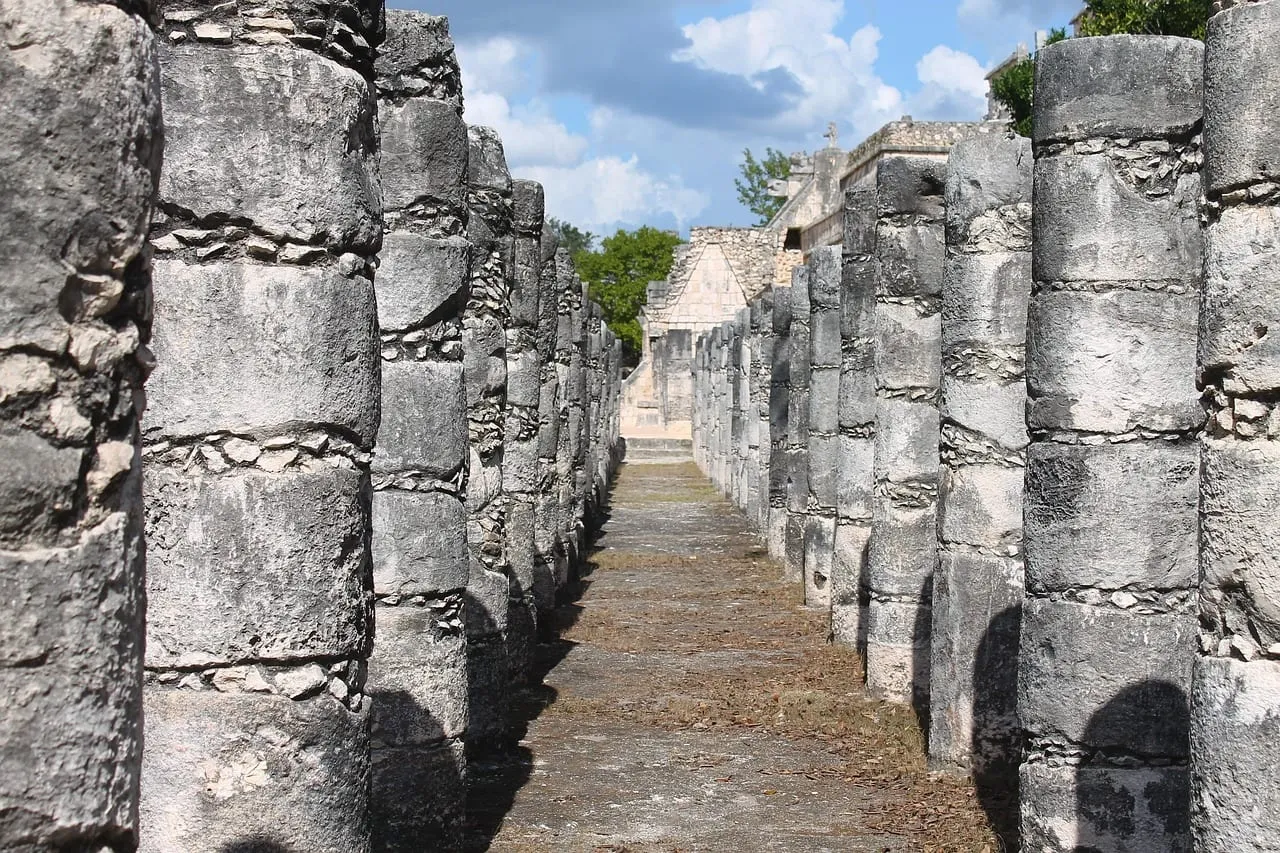
Temple of the Warriors and Group of the Thousand Columns
A temple with a Chac Mool and feathered-serpent columns on top, fronted by rows of carved stone pillars that once held a roof. Roped off, but the carvings of warriors on the columns are close enough to see.
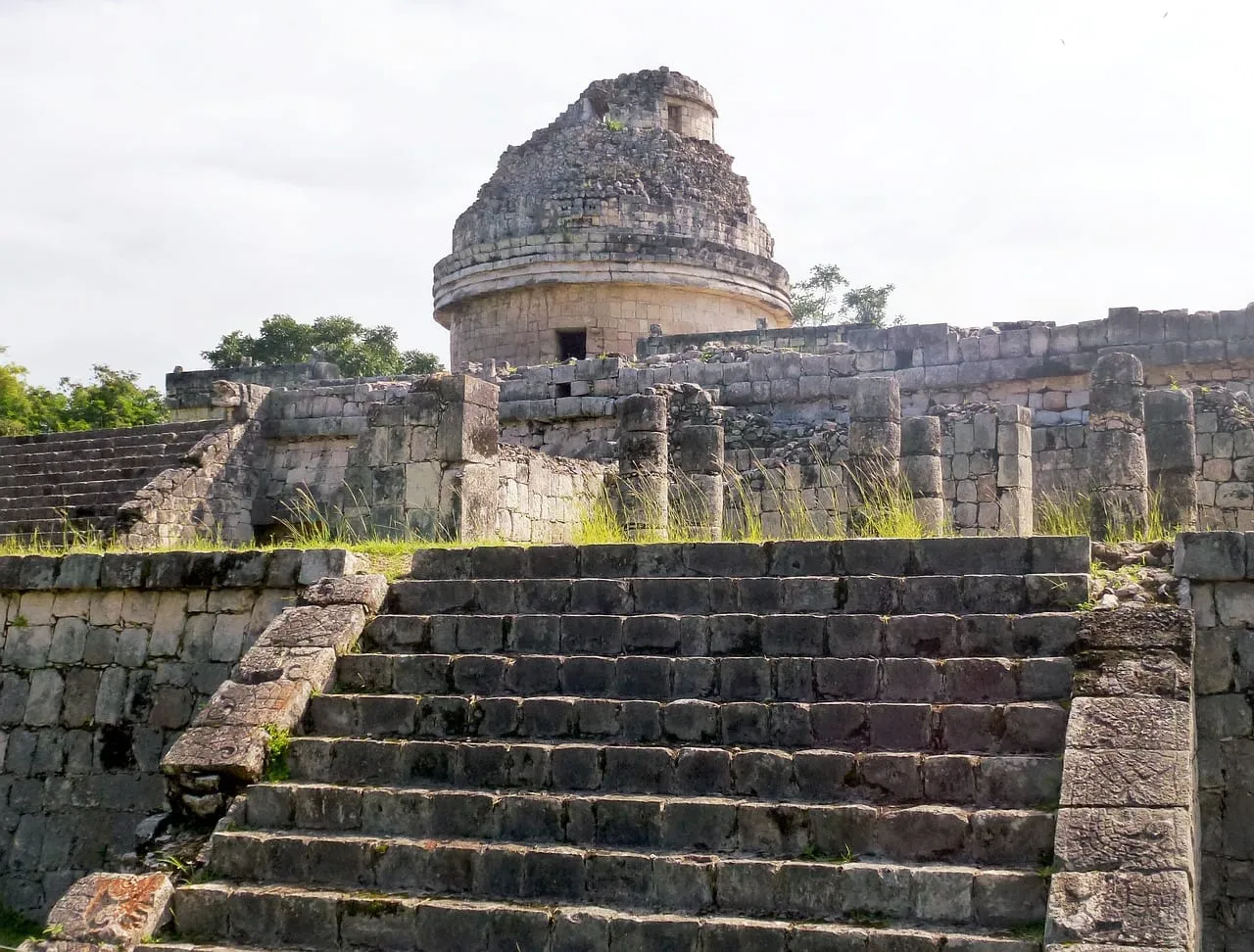
El Caracol (the Observatory)
A round tower on a two-level platform in the central-southern part of the site, thought to have served as an observatory. Many groups never get this far, so it is quieter.
Las Monjas and Akab Dzib
The Nunnery group: older Puuc and Chenes-style buildings with mask-covered facades and the site's most important hieroglyphic texts. Worth the extra 10 minutes' walk south from El Caracol.
Chichén Viejo (Serie Inicial)
An older area reached by a 1.5 km path from the main site, reopened after years of excavation. INAH runs guided visits only on Fridays and Saturdays (9:00–11:30 and 12:00–14:30) in groups of up to 50, booked at the ticket office; about two and a half hours.
Gran Museo de Chichén Itzá
The museum at the visitor centre, included in your ticket; INAH lists it as open 8:00–17:00. On busy days INAH has run access from inside the site by the Sacred Cenote, with re-entry the same way.
Chichén Itzá tickets: which to buy and where
Most visitors should simply buy the combined ticket at the ticket office of the new visitor centre (CATVI) on the day: MX$697 for foreign adults, one payment since 27 March 2026. There is no official online ticket for entry. Reseller "skip-the-line" tickets cost roughly double and only skip the ticket window; everyone still goes through the security check with metal detectors.
The official ticket site
INAH and the Yucatán state government, ticket office at the Centro de Atención a Visitantes (CATVI)
Entry is sold at the ticket office at the site. We found no official online sale for entry: INAH (inah.gob.mx) runs the site and the Yucatán state body CULTUR collects the state part; neither sells entry through a .com ticket shop. After the site's closure from 19 May to 1 June 2026, during a dispute with craft vendors, all visitors enter through CATVI. The night show is the exception: CULTUR sells it at nochesdekukulkan.com.mx.
Combined entry ticket (boleto único)
MX$697 foreign adult; MX$310 Mexican nationals; MX$105 Yucatán residents; Mexican nationals free on Sundays
(€34 · €15 · €5)
Official ticketsDoes not skip lines
- Includes
- The archaeological zone and the Gran Museo. One payment at one window since 27 March 2026 (before that MX$105 federal and the state fee at two windows). Sources disagree on foreign children (free under 12 or 13, or about MX$110): ask at the window and bring a passport for each child
- Best for
- Everyone travelling independently
Ticket office at CATVI (INAH and Yucatán state) · as of March 2026See this ticket → (opens in a new tab)Chichén Viejo guided visit
INAH's page says it is included in the zone ticket but also lists a MX$210 foreign rate: ask at the window
(€10)
Official ticketsDoes not skip lines
- Includes
- A guided walk of about 2.5 hours with INAH staff to the older Serie Inicial area, Fridays and Saturdays only, groups of up to 50; reserve at the ticket office. Suspended during the equinox operations
- Best for
- Second visits and anyone who wants the quieter, older city
Ticket office at CATVI (INAH) · as of October 2026See this ticket → (opens in a new tab)Noches de Kukulkán night show
MX$433 (state CULTUR tariff, May 2026)
(€21)
Official ticketsSkips the ticket line
- Includes
- An evening walk in the archaeological zone and a video-mapping show on the buildings, audio in Spanish. Dates and times only show in the booking calendar; it was cancelled on the busy equinox days in March 2026
- Best for
- Anyone staying overnight at Chichén Itzá or in Valladolid
CULTUR (official online seller for the show) · as of May 2026See this ticket → (opens in a new tab)Chichén Itzá: Entry Ticket
from €70.30
ResellerSkips some lines
- Includes
- Entry with both fees; the e-ticket comes by WhatsApp or email the day before and you go straight to the entrance. Download it before you arrive: there is no phone signal at the site. Still goes through security. Supplier: Operadora Arozarena
- Best for
- Only if you want everything paid in advance and accept roughly double the window price
 Tiqets · as of October 2026See this ticket → (opens in a new tab)
Chichén Itzá Skip-the-Line Tickets
from €57.78 adult
ResellerSkips some lines
- Includes
- Entry and the state fee for adults; you show the voucher at the ticket office to collect the ticket, then go in on your own. Free cancellation up to 24 hours before. Children are not included
- Best for
- Travellers who must pay in euros by card in advance
 Civitatis · as of October 2026See this ticket → (opens in a new tab)
How to buy
- Arrive at the new visitor centre (CATVI), where all visitors now enter; the path to it passes through the craft market.
- Pay the combined ticket at the ticket window: MX$697 for a foreign adult. Bring pesos as well as a card, since payment methods have changed with the new system and reports differ; the security check has metal detectors and bag searches, so allow extra time.
- If you carry a GoPro, a professional camera or a selfie stick, declare it at the window: there is an extra fee per device. Tripods and drones are not allowed.
- Mexican nationals show an INE or Mexican passport for the MX$310 rate or free Sunday entry; Yucatán residents show official ID with a Yucatán address.
Look-alike sites
Several private websites use the name Chichén Itzá in their domain and sell "official" or "skip-the-line" tickets at about double the window price. Neither INAH (whose site ends in inah.gob.mx) nor the Yucatán state sells entry online through a .com shop; you buy at the ticket office on arrival. For the night show, the state's only online seller is nochesdekukulkan.com.mx: CULTUR has warned before about fake Facebook pages selling show tickets.
We can never guarantee a ticket seller, tour company or deal. Prices, opening hours and what is included change, often without notice: check the details on the seller’s own page before you pay, and book through the official site where you can. How to avoid ticket scams · Disclaimer.
Guided tours of Chichén Itzá
You do not need a tour to enter, and most buildings are roped off, so a guide is mainly worth it for the stories behind the carvings and the astronomy. If you are based in Cancún or Playa del Carmen without a car, a day tour solves the 2–3 hour journey, but check whether the entrance fee is included: many tours collect it in US dollars on the day. From Valladolid you can be at the gate for 8:00 on your own or with a small local outfit.
Full-day coach tour from Cancún and the Riviera Maya
Cancún: Chichén Itzá, Cenote & Valladolid Tour with Lunch
 Amigo Tours LATAM (via GetYourGuide)
About 2.5 hours at Chichén Itzá with a guide, then Cenote Chichikan near Valladolid and 30 minutes in Valladolid. Buffet lunch, cenote life jacket and drinks only in the VIP or All-Inclusive options. Long day; not for wheelchair users.
from €51; entrance fee of $44 (US) payable on the day unless you book the All-Inclusive option
See this tour → (opens in a new tab)Full-day coach tour with fees included
From Cancún/Riviera Maya: Chichén Itzá with cenote swim, buffet lunch, entry fees and taxes included
 Headout (operator not named on the page)
Hotel pick-up, bilingual guide at the site, both federal and state fees, a cenote and free time in Valladolid. Drinks, life jacket, lockers and camera fees extra. Pay more up front, but no surprises on the day.
€82.77 (discounted from €91.96)
See this tour → (opens in a new tab)Small-group morning tour from Valladolid
Go Chichén
 MexiGo Tours (Valladolid)
Pick-up from your Valladolid hotel at 7:00–7:30, a 1.5-hour guided visit from 8:30, free time, then a swim in a quieter cenote; back by 13:30. Minimum 3 people. Pay the balance in pesos cash (4% extra by card); no shopping stops.
MX$1,650 or $99 (US) per person; entrance (MX$697) not included
(€80 · €34)
See this tour → (opens in a new tab)Guided walk at the site (you get there yourself)
Chichén Itzá on-site guided tour with certified local expert
 Amigo Tours México (via Musement)
English or Spanish, meeting at the main entrance 10 minutes before your slot. The page still names the old Parador Turístico; since June 2026 visitors enter via CATVI, so confirm the meeting point. Suits drivers and train travellers who want a guide but not a coach day.
We can never guarantee a ticket seller, tour company or deal. Prices, opening hours and what is included change, often without notice: check the details on the seller’s own page before you pay, and book through the official site where you can. How to avoid ticket scams · Disclaimer.
Chichén Itzá deals and discounts
The ticket at the window is the best buy: every online "skip-the-line" ticket we found costs roughly double and still goes through security. The real savings are for Mexican nationals and residents (free on Sundays) and for anyone who skips the Cancún coach tours in favour of the train or a Valladolid base.
Free on Sundays for Mexican nationals
Mexican nationals enter free on Sundays, with INE or a Mexican passport; the free Sunday also covers the state part since the single ticket. Expect more crowds on Sundays as a result.
Yucatán residents pay only the federal fee
Residents of Yucatán's municipalities pay only the INAH fee (MX$105), and INAH says they can also enter without that fee any day with official ID showing a Yucatán address. Ask at the window which applies to you.
Free INAH entry for Mexican children, students, teachers and seniors
INAH lets Mexicans under 13, students, teachers, seniors (60+), retirees and people with disabilities in without its fee; check at the window whether the state part is also waived for your category.
Tren Maya fares cut for tourists
Since late April 2026 non-local travellers pay one "Turista" rate instead of a higher foreigner fare: about MX$351 from Cancún to Chichén Itzá, plus a shuttle from the station (about MX$55 in one June 2026 report). Cheaper than most coach tours, but you see the site on your own.
Best time to visit Chichén Itzá
Time of day: be at the ticket office before 8:00. The first two hours are cooler and calmer; coach tours from Cancún and the Riviera Maya arrive from late morning, when the site and the vendors' paths fill up. The last entry is 16:00, and late afternoon thins out again but is hot.
Season and days: November to March is the least hot; April to October is hot and humid, with afternoon storms in the rainy season. Weekdays are calmer than weekends, and Sundays are busy because entry is free for Mexican nationals. Easter week is busiest from Thursday to Sunday.
Equinoxes: around 21 March and 22 September tens of thousands come to watch the serpent of light, visible roughly 15:00–17:00. In March 2026 the ticket office closed at 16:00, outlying groups closed at 15:30, tripods and drones were banned and the night show was cancelled on two of the three days. Come on another day unless the serpent is the point of your trip.
Tips and tricks
Gathered from travel forums, locals and the sight’s own advice, rewritten in our own words. What worked for others, not a guarantee.
Mind the time zone from Cancún
Yucatán (Chichén Itzá) runs one hour behind Quintana Roo (Cancún, Tulum, Playa del Carmen). Train and bus times, the 8:00 opening and the 16:00 last entry are all in Yucatán time.
From ADO route page, 2026
Sleep nearby to beat the coaches
Stay a night in Valladolid (40–45 minutes away) or in one of the hotels by the ruins in Pisté, and be at the gate at 8:00. Day-trippers from Cancún rarely arrive before late morning.
From MexiGo Tours itinerary and TripAdvisor Chichén Itzá forum, 2026
Buy at the window, ignore the touts
On the approach you may be told you must buy a ticket, a skip-the-line pass or a guide before going in. You don't: pay at the ticket office and hire a guide there if you want one.
From TripAdvisor Chichén Itzá forum, 2026
Download tickets and guides before you go
There is little or no phone signal at the site: download any e-ticket, map or audio guide to your phone the night before.
From Tiqets ticket conditions and TripAdvisor Chichén Itzá forum, 2026
Leave the big camera kit at home
GoPros, professional cameras and selfie sticks carry an extra fee per device, and it is unclear what counts as professional. Tripods and drones are banned, and professional filming needs an INAH permit in advance. A phone or a compact avoids the question.
From Musement tour conditions, INAH bulletin 105 and TripAdvisor Chichén Itzá forum, 2026
Bring water, a hat and pesos
There is little shade between the buildings. Carry water and sunscreen, wear a hat and good shoes, and have pesos for parking, the cenote and snacks. Food is officially not allowed inside the zone, so eat before or after.
From INAH site information, 2026
Walk south first
Most groups do El Castillo, the Ball Court and the Sacred Cenote and then leave. After a first look at El Castillo, head south to El Caracol and Las Monjas while it is still cool and empty, and finish on the main plaza.
From Sightsale, based on the site layout
Check for closures the week you go
The site closed without much warning from 19 May to 1 June 2026 during a dispute with craft vendors over the move to the new visitor centre, and the dispute flared again in July 2026. Check INAH's channels and local news for closures before you travel, especially if you are coming from Cancún for the day.
From Expansión, El Financiero and Diario de Yucatán, May–July 2026
Combine with a cenote swim
Ik Kil is about 10 minutes east of Pisté and opens around 9:00; go straight after an early visit to Chichén Itzá, before the tour buses that stop there for a swim and lunch.
From Ik Kil guides, 2026
How to get to Chichén Itzá
- From Cancún by train: the Tren Maya runs from Cancún (airport station) to Chichén Itzá station in about 2 hours 15 minutes; tourist fares have been about MX$351 since late April 2026. A shuttle (about MX$55 in one June 2026 report) covers the few kilometres from the station to the site. Check times on the official Tren Maya site and remember the one-hour time difference.
- From Cancún by bus: ADO runs a direct tourist service from ADO Cancún Centro (Av. Tulum at Av. Uxmal) to Chichén Itzá on Sundays, from about MX$496 one way, about 2 hours 45 minutes, with a late-afternoon return. Other ADO buses on the corridor run via Valladolid.
- From Valladolid: 40–45 minutes by car. Colectivos (shared vans) leave from central Valladolid when full from about 7:00 for around MX$40, and taxis charge roughly MX$500–600 one way (undated blog figures; agree the price first). The Tren Maya also links Valladolid and Chichén Itzá.
- From Mérida: about 115–120 km east on Highway 180; by Tren Maya from Mérida Teya station (about MX$220 in March 2026, before the April fare change) or by ADO bus from the Mérida terminals.
- Parking: the official car park at the visitor centre costs MX$124 for a car or van (MX$199 for a Sprinter) since 1 May 2026. Unofficial car parks just before it also take cash.
Scams and problems to watch for
Tours that leave out the entrance fee
Cheap Cancún day tours (from about €35) often exclude the Chichén Itzá fees and collect $42–44 (US) in cash or by card on the day, which is more than the MX$697 at the window at current rates; some also charge a compulsory cenote life jacket. Tell-tale sign: "without taxes" in the title or "admission fees not included" in the small print.
"Official" online tickets at double the price
Resellers and private ticket sites sell entry for €57–70 under titles like "official skip-the-line". The window price is about half, and the pre-paid ticket only skips the ticket counter, not the security check. Tell-tale sign: a .com domain with Chichén Itzá in the name and a price in euros or dollars.
Touts on the approach
On the road and in the car parks, people may wave you into a car park, say you need a guide or an advance ticket, or offer a "skip the queue". You don't need any of it. Tell-tale sign: anyone asking for money before the ticket office.
Fake night-show tickets
The state tourism body has warned about a Facebook page selling fake Noches de Kukulkán tickets; several visitors paid and could not get in. Tell-tale sign: any seller other than nochesdekukulkan.com.mx or the site's own ticket office.
Vendors inside the site
Hundreds of authorised craft vendors line the paths, especially the causeway to the Sacred Cenote, calling out prices like "one dollar". They stay at their stalls; a polite "no, gracias" is enough. Their number and place are part of a dispute that closed the site from 19 May to 1 June 2026, so expect changes.
Camera fee surprises
Bags go through metal detectors and hand checks, and a GoPro, professional camera or selfie stick needs a device fee paid at the ticket window; it is unclear which cameras count as professional. Declare any doubtful kit at the window rather than finding out at the security check.
Accessibility
The main routes are wide, mostly level paths of compacted limestone and gravel, with gentle slopes, so a wheelchair user can reach the Great North Platform and see El Castillo, the Ball Court and the Temple of the Warriors from ground level; no one may climb the buildings. Surfaces get rough and dusty further out (El Caracol, Las Monjas, the causeway to the Sacred Cenote), there is little shade and the walk to the southern groups is long in the heat. INAH lists accessibility services at the Gran Museo by the visitor centre. INAH waives its fee for Mexicans with disabilities; we found no information on wheelchair loan. Most coach tours say they are not suitable for wheelchair users, so a private driver or the train and shuttle is easier.
Combine it with
Cenote Ik Kil
A round, 50-metre-deep open cenote with hanging vines, a few minutes east of the site. Entry in the low hundreds of pesos (guides cite MX$200–250 in 2026), open about 9:00–17:00; life jackets are compulsory.
Valladolid
A colonial town 40–45 minutes east with the 16th-century Convent of San Bernardino of Siena and the cathedral of San Gervasio on the main square. The best base for an early start.
Ek Balam
A smaller Maya city north of Valladolid, combined with Chichén Itzá by many Valladolid tours. Foreign adults paid MX$691 in January 2026, so it is no cheap add-on, but it is far calmer than Chichén Itzá.
Izamal
The "yellow town" on the way to Mérida, with a huge Franciscan convent built on a Maya platform and pyramids in the streets. INAH suggests it as an alternative on equinox days.
Tulum
On SightsaleThe walled Maya port on the Caribbean cliffs, about 2–2.5 hours east by road via Valladolid, in Quintana Roo (one hour ahead). Too far to pair comfortably in one day on your own, but the two make a natural Yucatán peninsula trip, with a night in Valladolid in between.

Questions people ask about visiting Chichén Itzá
How much is the entrance to Chichén Itzá in 2026?
Foreign adults pay MX$697 for one combined ticket (MX$105 federal INAH fee plus the Yucatán state fee), paid at one window since 27 March 2026. Mexican nationals pay MX$310 and enter free on Sundays; Yucatán residents pay MX$105. Camera devices such as a GoPro cost extra.
Do I need to buy Chichén Itzá tickets in advance?
No, and you cannot: there is no official online ticket for entry, only the ticket office at the visitor centre (MX$697 for foreign adults since 27 March 2026). Reseller tickets online cost €57–70, roughly double, and you still pass the security check. Only the evening Noches de Kukulkán show is sold online by the state.
What time does Chichén Itzá open?
Every day from 8:00, last entry 16:00 (Yucatán time, one hour behind Cancún). INAH's pages give the closing time as 17:00, but its June 2026 reopening notice said 8:00–16:00, so plan to be out by about 16:30 and check the official site before you go. Around the equinoxes INAH runs special hours: in March 2026 the ticket office closed at 16:00 and everyone had left by 17:30.
Is a guided tour of Chichén Itzá worth it?
For most people a guide adds a lot, because you cannot enter the buildings and the stories are in the carvings. You don't need a coach tour for it: on-site guided walks cost from about £20, or hire a guide at the entrance. A day tour from Cancún mainly buys you transport.
Can you climb the pyramid at Chichén Itzá?
No. Climbing El Castillo has been banned since 2006, and the other buildings are roped off too. You can walk right around them.
How do I get from Cancún to Chichén Itzá without a tour?
Take the Tren Maya to Chichén Itzá station (about 2 hours 15 minutes, around MX$351 since April 2026) and the shuttle to the site, or ADO's direct Sunday bus from Cancún Centro (from about MX$496, about 2 hours 45 minutes). Or drive the toll highway 180D.
When is the best time to visit Chichén Itzá?
At the 8:00 opening, on a weekday between November and March. Coach tours from Cancún arrive from late morning. Avoid the equinox days (around 21 March and 22 September) unless you want to see the serpent of light with tens of thousands of others.
More sights in Mexico
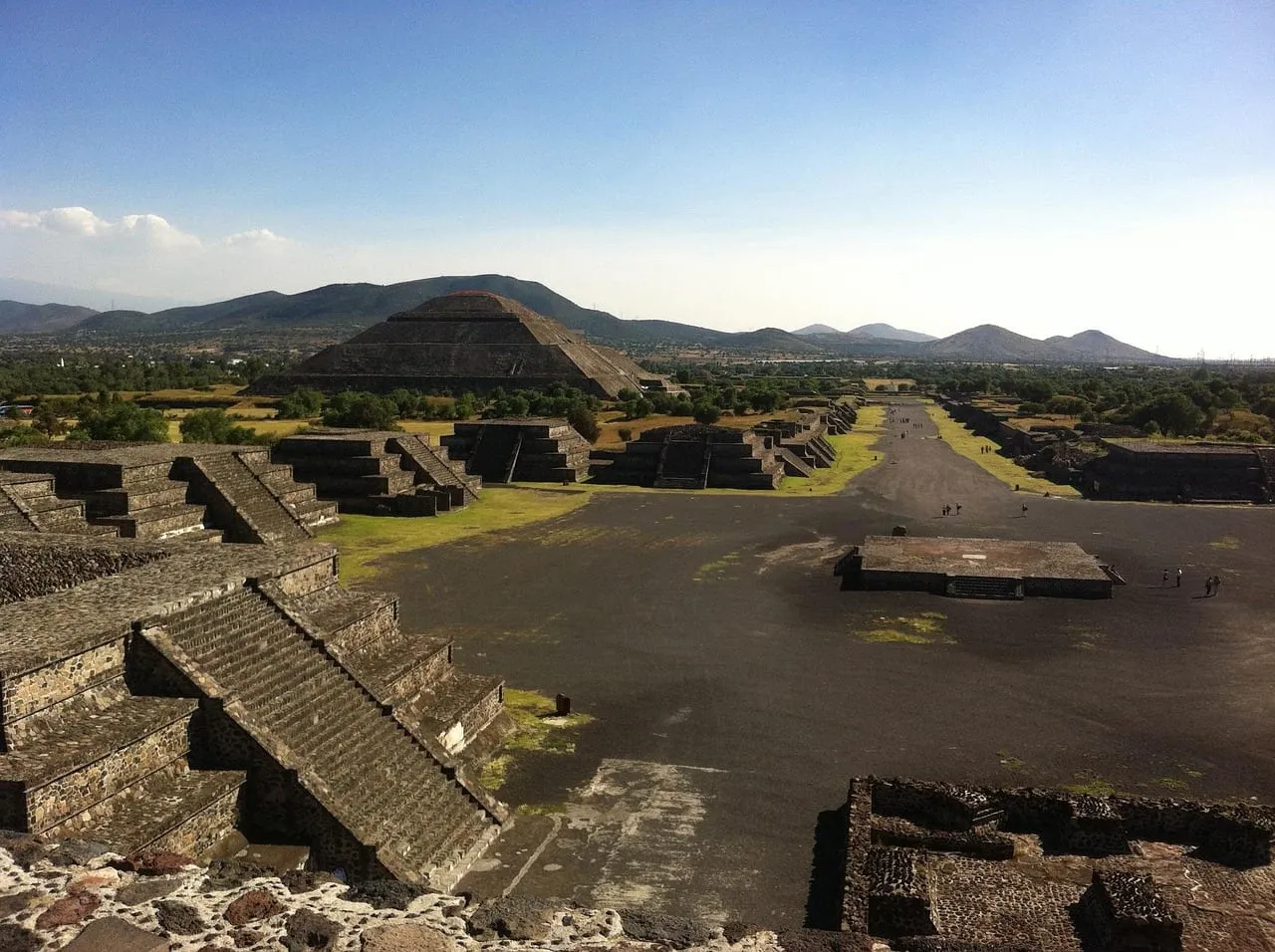
Teotihuacan
San Juan Teotihuacán, Mexico
The vast ancient city of the Pyramids of the Sun and Moon, an hour north of Mexico City
- From
- MX$210 for foreign visitors; MX$105 for Mexicans and residents; free on Sundays for them(€10 · €5)
- Time needed
- 3–5 hours on site; a full day from Mexico City

Tulum archaeological zone
Tulum, Mexico
A walled Maya port city on a cliff above the Caribbean, with a beach right below it.
- From
- MX$265 for foreign visitors(€13)
- Time needed
- 1.5–2 hours for the ruins; add an hour or two for the beach below and the museum
Before you go
The things that apply at every big sight: booking ahead, what skip-the-line really means, and the scams that follow tourists everywhere.