Tulum archaeological zone
Tulum, Mexico
Zona Arqueológica de Tulum
A walled Maya port city on a cliff above the Caribbean, with a beach right below it.
Checked 7 October 2026

Tulum is the walled Maya port city on a 12-metre cliff above the Caribbean, a few kilometres from Tulum town, now inside the Parque del Jaguar. Since 20 July 2026 a foreign visitor pays MX$265 in all (MX$100 park entry plus MX$165 for the national park and ruins), set by federal decree and bought only at the windows at the park entrance: there is no official online ticket, resellers charge more than twice as much, and tours sold online often leave the fees out. The ruins open at 8:00 with last entry at 15:30, and the tour buses from Cancún and Playa del Carmen arrive from about 10:00, so go at opening.
About Tulum archaeological zone
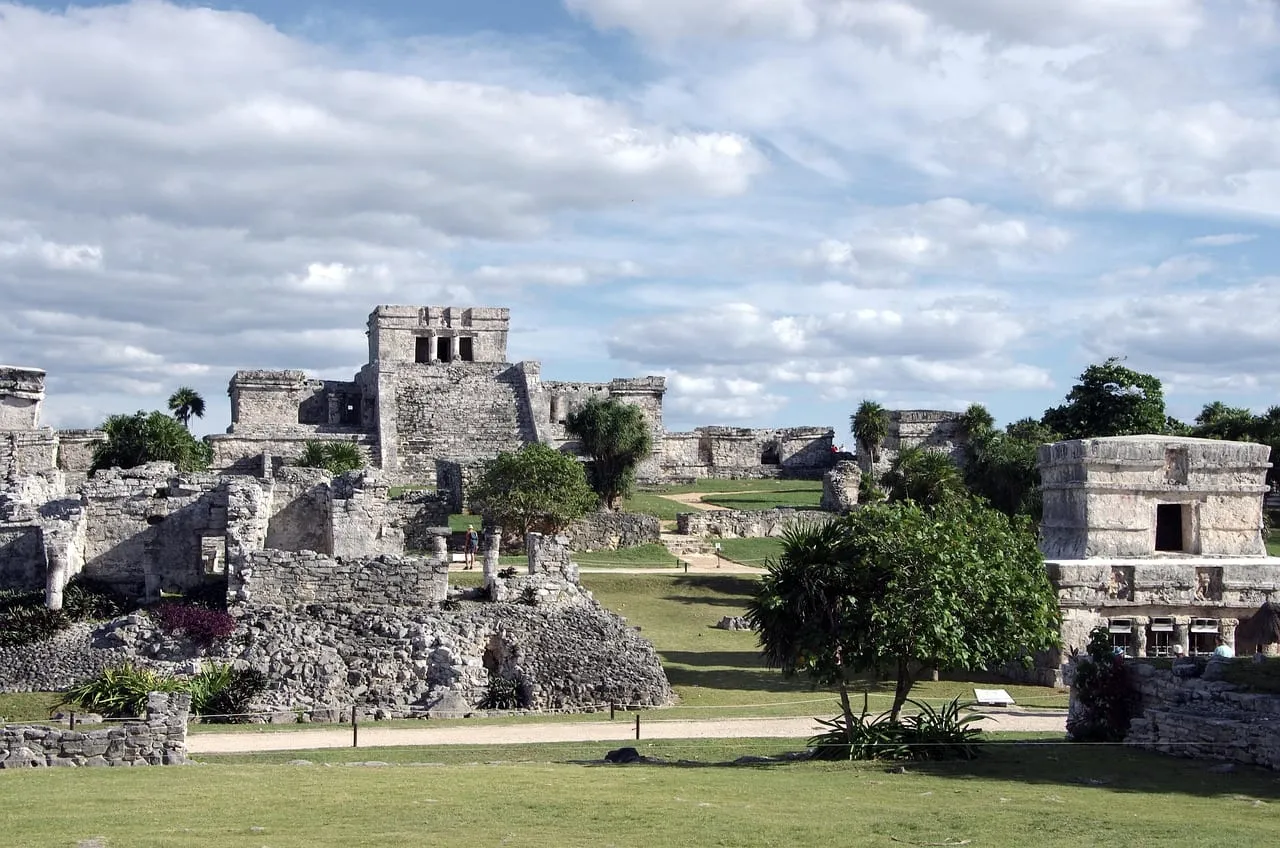
Tulum is one of the very few walled cities the Maya built, and the only big Maya site that sits right on the Caribbean. Stone walls up to about four metres high close it in on the north, south and west; the east side is a 12-metre limestone cliff dropping to a small beach and turquoise water. On top of the cliff stands El Castillo, the building every postcard of the Riviera Maya shows.
The city was at its height between roughly the 13th and 15th centuries, as a trading port for Cobá inland. Canoes coming along the coast landed jade, obsidian, copper bells and cacao on the beach below, and the narrow windows of El Castillo are thought to have worked as a lighthouse, lining up with the one safe gap in the reef. Its name may once have been Zamá, the city of dawn, because it faces the sunrise; Tulum means wall.
Spanish sailors on Juan de Grijalva's expedition saw it in 1518 and described a city still in use; the Maya lived here for decades after contact before leaving by the end of the 16th century. The travellers John Lloyd Stephens and Frederick Catherwood published the first detailed description and drawings in 1843, and the site has been studied ever since.
Today it is one of the most visited archaeological sites in Mexico, behind only Chichén Itzá and Teotihuacan, with around a million visitors a year. Since 2024 it sits inside the Parque del Jaguar, a protected park run by a state company under the Defence Ministry that also takes in the beaches, jungle trails and a museum. The park's fees and rules changed again in July 2026, so check them on this page before you go.
What to see
El Castillo
The temple at the highest point of the cliff, 7.5 metres tall and built in several phases. Its upper windows are thought to have guided canoes through the reef at night. You cannot climb it; the best views are from the cliff-top paths and from the beach below.
Temple of the Frescoes
The best-preserved building, slightly inland, with carved figures on the façade and traces of blue and red murals of gods and the underworld inside. You look in from outside; entry is no longer allowed.
Temple of the Descending God
Named for the carved figure diving headfirst above its door, a figure that appears all over Tulum. Researchers link it to the setting sun or the planet Venus, but nobody knows for sure.
The city wall
The wall that gives Tulum its name runs along three sides, with five narrow gateways. You enter through one of them; look at how small they are, built for people on foot and easy to defend.
Playa Ruinas, the beach below
A small beach under the cliff where canoes once landed, reached from inside the site. Bring a swimsuit and towel: there is no re-entry once you leave the ruins. It can be closed in high surf or for sea-turtle nesting, and sargassum seaweed can cover it in summer.
Museo Regional de la Costa Oriental
INAH's museum inside the Parque del Jaguar, opened in September 2024: over 300 Maya objects, a scale model of the walled city and an immersive screen room. Free at the door (you only pay the park entry), Tuesday to Sunday 9:00–17:00, closed Mondays.
Tulum archaeological zone tickets: which to buy and where
You buy everything at the ticket windows at the entrance of the Parque del Jaguar on the day: foreign visitors pay MX$100 for the park plus MX$165 for the national park and the ruins, MX$265 in all (fees set by federal decree from 20 July 2026, through 2027). There is no official online ticket and no need to book; reseller 'tickets' cost more than twice the gate price. The catch is tours: many cheap online tours do not include these fees and collect about $40 (US) extra from you on the day, more than the MX$265 the park and ruins have cost at the window since July 2026.
The official ticket site
Parque del Jaguar ticket windows (Grupo Mundo Maya / GAFSACOMM, for INAH and CONANP)
Since 27 July 2026 the fees are collected at the windows of Grupo Mundo Maya, the Defence Ministry company that runs the park; INAH staff still run the site. The park's own site (parquedeljaguar.grupomundomaya.com, linked from grupomundomaya.com) had no online ticket sale on 7 October 2026. Rules come from INAH (inah.gob.mx) and CONANP (gob.mx/conanp).
Full visit, foreign visitors
MX$265 (MX$100 park + MX$165 national park and ruins); minors free with ID
(€13 · €5 · €8)
Official ticketsDoes not skip lines
- Includes
- Parque del Jaguar entry plus one combined fee for the Parque Nacional Tulum (MX$65) and the archaeological zone (MX$100); the beach below the ruins
- Best for
- Most visitors: the cheapest way in
Park ticket windows at the entrance · as of July 2026See this ticket → (opens in a new tab)Full visit, Mexican nationals
MX$80 Monday–Saturday; free on Sundays; park entry free
(€4)
Official ticketsDoes not skip lines
- Includes
- Combined fee for the Parque Nacional Tulum (MX$30) and the archaeological zone (MX$50); Mexican ID needed
- Best for
- Mexican citizens; foreign residents of Mexico also enter free on Sundays with proof of residency
Park ticket windows at the entrance · as of July 2026See this ticket → (opens in a new tab)Electric shuttle inside the park
MX$20 adult, MX$10 child
(under €1)
Official ticketsDoes not skip lines
- Includes
- Ride between the entrance area and the ruins (about 1 km) and to the beaches; optional
- Best for
- Hot middays, children, anyone who finds the walk hard
Park, at the entrance · as of July 2026See this ticket → (opens in a new tab)Tulum Archaeological Site Ticket With Skip-the-Line Entry
from €31.25
ResellerSkips some lines
- Includes
- Ruins plus Parque del Jaguar access; optional guided group upgrade; free cancellation up to 24 hours. The seller promises a faster lane; on the ground there is one entry to the walled site for everyone
- Best for
- Only if you want the fee paid in advance by card; it costs more than twice the gate price
 Headout · as of October 2026See this ticket → (opens in a new tab)
How to buy
- Go to the Parque del Jaguar entrance off Highway 307 just north of Tulum town; car parks and the ticket windows are at the entrance strip.
- Pay the park entry (MX$100 for foreigners, free for Mexicans) and the combined national park and ruins fee (MX$165 for foreigners, MX$80 for Mexicans Monday–Saturday). Carry pesos in cash and a card: sources disagree on whether cards are taken at every window.
- Going only to the beaches? Officials said on 17 July 2026 that beach-only visitors pay no park admission, but the published fee list charges foreigners MX$100 to enter the park with no separate beach rate. Expect to be asked for the MX$100 and say at the window if you are going only to the beach.
- If you claim a free or reduced entry (children, seniors, students, teachers, disabled visitors, Mexican residents on Sundays), bring the physical ID or card itself; a photo on your phone may be refused.
- Walk about 1 km (15 minutes) to the gate in the city wall, or take the electric shuttle for MX$20. The last entry to the ruins is 15:30.
Look-alike sites
There is no official online ticket for the Tulum ruins. The park is run by Grupo Mundo Maya (grupomundomaya.com, with the park site at parquedeljaguar.grupomundomaya.com), and the archaeological rules come from INAH on inah.gob.mx. Any site that sells 'official Tulum tickets' online is a reseller adding its own margin, often more than double the MX$265 gate price, and may still not include every fee. Check the small print for 'fees not included', 'government tax' or 'pay on the day'.
We can never guarantee a ticket seller, tour company or deal. Prices, opening hours and what is included change, often without notice: check the details on the seller’s own page before you pay, and book through the official site where you can. How to avoid ticket scams · Disclaimer.
Guided tours of Tulum archaeological zone
Tulum is compact and you can walk it alone in under two hours, but the signs are thin, so a guide adds a lot if it is your only Maya site. The simplest way is a licensed guide hired at the entrance. From Cancún or Playa del Carmen, day tours combine Tulum with Cobá or cenotes; they save you the driving, but the low headline prices usually exclude the entry fees.
Private or shared guide hired on the spot
Licensed guide at the entrance
SECTUR-accredited guides at the park entrance
Tours in English or Spanish at prices you agree directly. Ask to see the accreditation badge and agree the price and length before you start. Accredited guides do not pay the entry fees themselves.
about $25–40 (US) per group in one 2026 guide; agree it in advance
See this tour → (opens in a new tab)Private early-morning tour with transport, Tulum-based
Tulum Ruins – Private
Mexico Kan Tours
Pick-up at your Tulum hotel at 7:30–7:45 so you are inside before the crowds; air-conditioned van, the company's own guide and the entrance fees included. Card payments carry a fee of up to 7%.
$220 (US) per person for two; from $135 (US) per person in large groups
See this tour → (opens in a new tab)Small-group walking tour, entry not included
Mayan Ruins of Tulum: Guided Tour Only
 Marketing Travel and Conventions AIE (via Tiqets)
Maximum 15 people, English and Spanish, federally certified guide. Meeting point on Avenida Ruinas de Tulum near the entrance. You buy the MX$265 entry yourself at the window.
Group day trip from Riviera Maya hotels
Tulum Ruins and 2 Cenotes Half-Day Tour
 Ekinox Tours (via GetYourGuide)
Hotel pick-up between Playa del Carmen and Tulum, 2 hours guided at the ruins, then swims at Cenote Mariposa and Cenote Chen-Ha. The ruins, park, cenote and government fees ($40 (US) per adult, $20 (US) per child) are not included and are paid in cash to the guide when you board. The listed fee also covers the cenote park and has not been visibly adjusted to the July 2026 gate prices; ask what it includes.
from €24, plus $40 (US) fees in cash (as listed in October 2026)
See this tour → (opens in a new tab)Group day trip from Cancún and Riviera Maya
Tulum & Coba with Cenote, Cave Exploration and Lunch
Amigo Tours LATAM (via GetYourGuide)About 2 hours each at Tulum and Cobá with a guide, then a cenote cave swim and buffet lunch. The archaeological fees ($44 (US) for Tulum and Cobá together, as listed in October 2026) are extra unless you pick the all-inclusive option, and are paid by card on the day or the day before. Long day: about 100 minutes each way by coach from Cancún.
from €37, plus $44 (US) site fees (as listed in October 2026)
See this tour → (opens in a new tab)
We can never guarantee a ticket seller, tour company or deal. Prices, opening hours and what is included change, often without notice: check the details on the seller’s own page before you pay, and book through the official site where you can. How to avoid ticket scams · Disclaimer.
Tulum archaeological zone deals and discounts
The gate is the best buy: MX$265 for a foreign visitor covers everything, and online 'tickets' cost more than twice that. The real savings are for Mexicans and residents (free park, free Sundays at the ruins) and the free museum and beaches inside the park.
Free Sundays for Mexicans and residents
Mexican nationals pay nothing on Sundays for the national park and the ruins. Foreign residents of Mexico also enter free on Sundays: The Tulum Times reports this for all three fees, other reports only for the ruins, so bring proof of residency and some pesos. Sundays are among the busiest days.
Free entry with ID for children and some groups
Federal law exempts minors (INAH counts under-13s), seniors, pensioners, students and teachers, disabled visitors and accredited guides. In practice the senior, student and teacher exemptions usually rely on Mexican credentials (such as the INAPAM card), so foreign adults should not count on them. Show the physical document.
Mexicans enter the park free; residents of Tulum pay nothing
Since 20 July 2026 Parque del Jaguar entry is free for Mexican visitors, who pay MX$80 for the ruins and national park Monday–Saturday. Residents of the municipality of Tulum are exempt from both fees.
Museum free inside the park
The Museo Regional de la Costa Oriental charges nothing at its door; once you are in the park, it costs nothing extra. Tuesday to Sunday 9:00–17:00.
Do it yourself instead of a fee-excluded tour
A tour 'from €24' plus $40 (US) in fees costs more than a taxi from Tulum town and the MX$265 entry. Tours earn their price on transport from Cancún or Playa del Carmen and the guide, not on the ticket.
Best time to visit Tulum archaeological zone
Time of day: be at the entrance before 8:00. The site is almost without shade, and from about 10:00 the tour buses from Cancún and Playa del Carmen fill the paths and the viewpoints over El Castillo. Late afternoon is quieter too, but the last entry is 15:30.
Season: late November to April is dry, clear and has the least sargassum seaweed. September and October are the cheapest and emptiest months, with rain and the tail of the hurricane season (June to October).
Sargassum: brown seaweed piles up on the Quintana Roo coast mostly from spring to early autumn and can spoil the beach below the ruins; check a daily sargassum report before planning a swim. The ruins themselves are fine in any season.
Avoid: Sundays (free for Mexican visitors) and Mexican holidays such as Easter week and Christmas to New Year, when the site is at its busiest. The quietest gate time on any day is the first hour.
Tips and tricks
Gathered from travel forums, locals and the sight’s own advice, rewritten in our own words. What worked for others, not a guarantee.
Bring a swimsuit, not a picnic
There is no re-entry once you leave the walled site, so swim at the beach below the cliff during your visit. Outside food is not allowed inside the ruins; sealed or reusable water bottles are, though some operators say single-use plastic bottles are refused.
From The Tulum Times visitor guides, 2026; GetYourGuide product notes, 2026
Leave the big bag and the drone
Large backpacks, drones and tripods are not allowed in the archaeological zone, and professional camera gear needs an INAH permit. Bring a small bag with water, hat and reef-safe sunscreen.
From The Tulum Times visitor guide, 2026
Carry pesos and a card
Sources disagree on whether cards work at every window, and you cannot count on a cash machine at the entrance. Bring small peso notes for parking, the shuttle and a guide, plus a card as backup.
From The Tulum Times visitor and parking guides, 2026
Head for El Castillo first
The view of El Castillo above the sea is what everyone queues for by mid-morning. Go straight to the cliff-top viewpoints at opening, then work back through the Temple of the Frescoes and the wall while the groups arrive.
From The Tulum Times visitor guides, 2026
Bring the real ID for any discount
Free or reduced entry needs the physical document at the window and at the gate; a phone photo may not be accepted.
From The Tulum Times fee explainer, July 2026
Add the museum and the park beaches
Your park entry also covers the museum (closed Mondays), jungle trails, bird-watching towers and the park's beaches, open until 19:00, so you can carry on after the ruins close.
From The Tulum Times, August 2026; Headout product page, 2026
Use the shuttle on the way back
From the entrance to the gate is about 1 km of paved jungle path. Walking in at 8:00 is pleasant; walking back at noon after two hours in the sun is not. The electric shuttle costs MX$20.
From The Tulum Times visitor guide, 2026
Check the sargassum report before a beach day
If the beach below the ruins is covered in seaweed, the cenotes inland or the Kaan Luum lagoon south of town are clear alternatives on the same day.
From The Tulum Times sargassum report, October 2026

How to get to Tulum archaeological zone
- From Tulum town: the entrance is about 5 km from the centre, 10–15 minutes by taxi (about MX$200–250; taxis are unmetered, so agree the fare first). Many visitors cycle there on the flat road. Colectivos (shared white vans) between Playa del Carmen and Tulum pass the turn-off on Highway 307 and can be flagged down.
- From Cancún and Playa del Carmen: about 45 minutes by car from Playa del Carmen and 1.5–2 hours from Cancún airport on Highway 307. ADO buses run to Tulum's bus station in town, from where you take a taxi.
- Tren Maya: the train stops at Tulum station and at Tulum Aeropuerto, but neither is next to the ruins; take a taxi on from the station. Since late April 2026 all non-local travellers pay one 'Turista' fare instead of a higher foreigner rate. Fares and timetables change; check them on the official Tren Maya site the same week.
- Tulum airport: Felipe Carrillo Puerto International Airport opened in December 2023, about half an hour south of town. The ADO coach to town cost MX$175 at launch; a taxi can cost over MX$1,000. No colectivos serve the airport.
- Parking: the park has no public car park of its own yet (a new one at the south entrance is planned). Private lots by the entrance on the highway charge about MX$150–250 a day, cash. Confirm the rate before you leave the car, and don't leave valuables visible.
Scams and problems to watch for
Tours that leave out the fees
Online day trips advertised 'from €24' often exclude the ruins, park and government fees, then collect $40–44 (US) per adult on the bus or on the day, sometimes cash only. Read the 'not included' list before you book and compare with the MX$265 gate price.
Reseller 'skip-the-line' tickets
Platform tickets for the ruins cost from about €31, more than twice the gate price, for a site with no timed entry and no online sale by the operator. The tell-tale sign is 'official' or 'skip the line' wording on a site that is not grupomundomaya.com or inah.gob.mx.
Private car parks that look official
The park has no public car park of its own, so the lots by the entrance on the highway are private and set their own prices (about MX$150–250 a day in 2026, higher in high season). Nobody in a lot can sell you park or ruins entry: those fees are paid only at the ticket windows. Agree the parking rate before you hand over keys.
Beach access tied to a restaurant booking
Drivers have been told they can only enter the park towards the beaches with a reservation at a beach club or restaurant, as there is nowhere else to park. Officials said in July 2026 that the beaches are free, while the published fees charge foreigners MX$100 to enter the park; either way no restaurant booking is needed, so if you want only the beach, come by bike, taxi or the park shuttle.
Unmetered taxis
Tulum taxis have no meters and quotes to tourists can be steep. Agree the fare before you get in, ask your hotel for the going rate, and avoid the 'free ride' and transfer booths in airport arrival halls.
Guide prices agreed on the spot
Guides at the entrance set their own rates, so the same hour can be quoted very differently. Only accredited guides (SECTUR) enter free with their groups; ask to see the badge and settle price, language and length before you start.
Accessibility
The archaeological zone is only partly accessible. From the entrance it is about 1 km on a paved path, which the park's electric shuttle (MX$20) covers. Inside the walls the paths are uneven stone, sand and grass with some slopes, and the beach is reached by steep wooden steps, so wheelchair users will see the main buildings only from the flatter paths with help. There is almost no shade. Tour operators list their Tulum trips as not suitable for people with mobility impairments. Visitors with disabilities are exempt from the fees on showing official ID. No wheelchair loan service was found in any current source.
Combine it with
Cobá
The big jungle city about 42 km inland that Tulum served as a port, with long white causeways and the 42-metre Nohoch Mul pyramid (no climbing since 2020). Entry is a separate INAH fee (MX$210 for foreign visitors in 2026). Many day tours pair the two.
Cenotes around Tulum
Freshwater sinkholes inland from the ruins, such as Cenote Mariposa and Cenote Chen-Ha on the Cobá road: clear water whatever the sargassum is doing on the coast. Each charges its own entry.
Sian Ka'an Biosphere Reserve and Muyil
A UNESCO-listed reserve of lagoons, mangroves and reef south of Tulum, run by CONANP. The small Maya site of Muyil (an INAH site with its own fee) sits on its lagoon, linked to the sea by old Maya canals.
Playa Paraíso and the Tulum beaches
Just south of the ruins, the most photographed beach in Tulum: free to walk on, with optional beach clubs. Public access points such as Playa Las Palmas are free.
Chichén Itzá
On SightsaleThe most famous Maya site in Mexico, inland in Yucatán state, about 2–2.5 hours west by road via Valladolid (Yucatán is one hour behind Tulum). A long day trip; the two pair better on a Yucatán peninsula trip with a night in Valladolid. Its combined ticket is MX$697 for foreign adults since March 2026.

Questions people ask about visiting Tulum archaeological zone
How much does it cost to enter the Tulum ruins in 2026?
Since July 2026 a foreign visitor pays MX$265 in all: MX$100 to enter the Parque del Jaguar plus MX$165 for the national park and the ruins. Mexicans enter the park free and pay MX$80 Monday–Saturday, free on Sundays. Minors enter free with ID. For the beaches only, officials said no park fee applies, but the published fees charge foreigners MX$100 at the park gate: budget for it.
Can I buy Tulum ruins tickets online?
Not from an official seller: in October 2026 the tickets were sold only at the windows at the park entrance. Online 'tickets' from platforms cost from about €31, more than twice the gate price, and you do not need to book ahead.
What are the Tulum ruins opening hours?
The archaeological zone is open daily 8:00–17:00; the last entry is 15:30 according to The Tulum Times (July 2026), though some guides say 16:00, so arrive by 15:30. The surrounding Parque del Jaguar stays open until 19:00, last entry 17:00, and the museum opens Tuesday to Sunday 9:00–17:00.
Can you swim at the Tulum ruins?
Yes, at Playa Ruinas, the small beach below the cliff, reached by steps inside the site. It can close in high surf or for turtle nesting, and sargassum seaweed can cover it in summer. There is no re-entry, so bring a swimsuit with you.
Do I need a guide for the Tulum ruins?
No. The site is small and easy to walk alone in 1.5–2 hours. A licensed guide at the entrance (about $25–40 (US) per group) adds the story behind the buildings, which signs barely cover.
What is the best time to visit the Tulum ruins?
Arrive for the 8:00 opening: it is cooler and quieter before the tour buses from Cancún and Playa del Carmen arrive around 10:00. Late November to April has the best weather and least seaweed.
How do I get from Tulum town to the ruins?
A taxi takes 10–15 minutes and costs about MX$200–250; agree the fare first. You can also cycle, or flag a colectivo on Highway 307. If you drive, use the private lots at the entrance (about MX$150–250 a day).
More sights in Mexico

Chichén Itzá
Chichén Itzá, Mexico
The great Maya city of Yucatán, with the stepped Temple of Kukulcán at its heart.
- From
- MX$697 foreign adult, one combined federal and state ticket(€34)
- Time needed
- 2.5–4 hours for the main groups; half a day with the museum and Chichén Viejo
Teotihuacan
San Juan Teotihuacán, Mexico
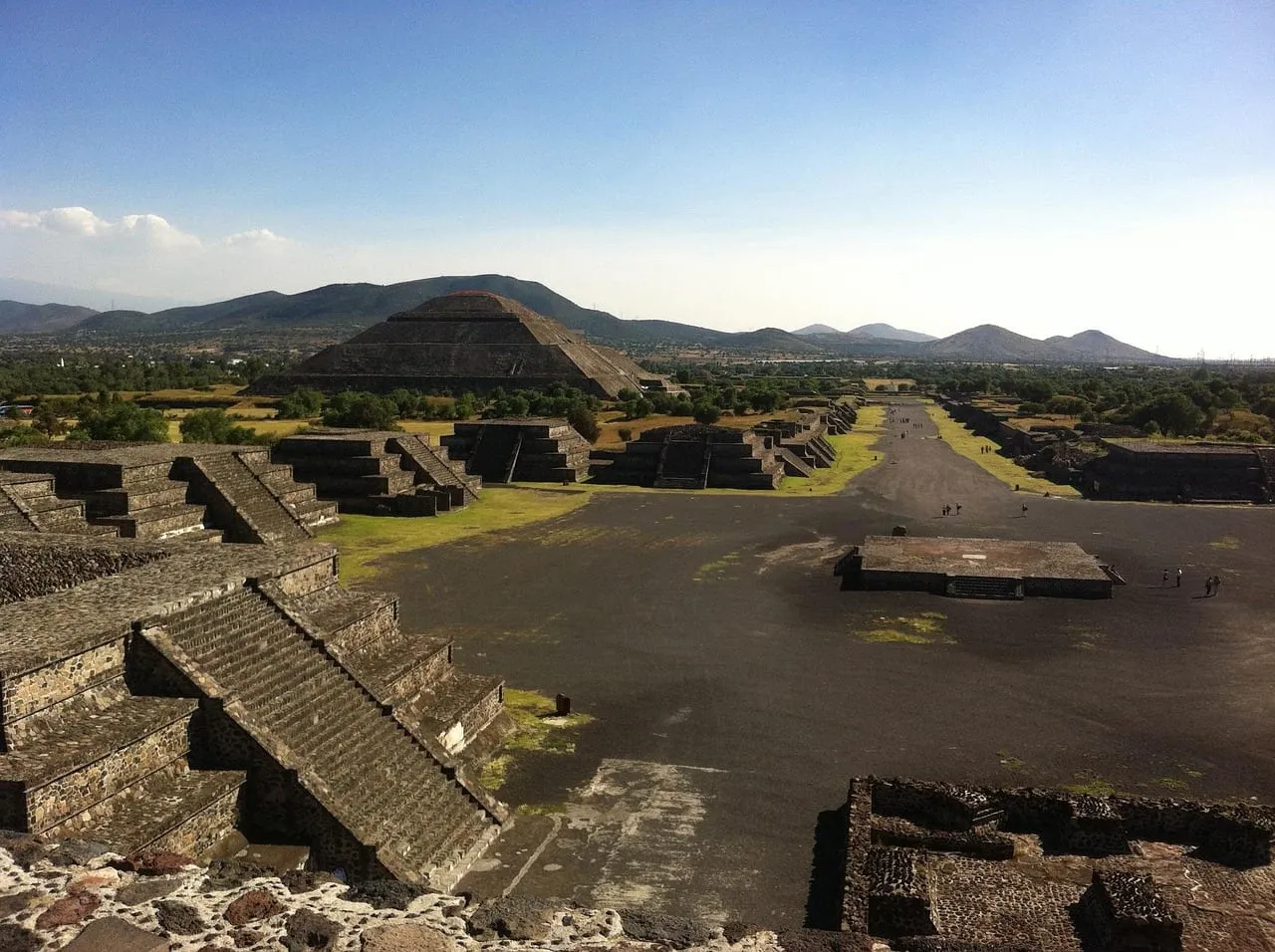
The vast ancient city of the Pyramids of the Sun and Moon, an hour north of Mexico City
- From
- MX$210 for foreign visitors; MX$105 for Mexicans and residents; free on Sundays for them(€10 · €5)
- Time needed
- 3–5 hours on site; a full day from Mexico City
Before you go
The things that apply at every big sight: booking ahead, what skip-the-line really means, and the scams that follow tourists everywhere.